
Opatroides punctulatus
Brullé, 1832
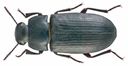
Opatroides punctulatus is a darkling beetle native to the Old World that has established in the United States. First detected in the U.S. over 20 years ago, the is expanding its range in the Pacific Northwest and has been confirmed in southwest Idaho. It is well adapted to Mediterranean climates and functions as a , with documented populations in stored-product environments in its native range.
Pronunciation
How to pronounce Opatroides punctulatus: /ˌoʊpəˈtrɔɪdiːz ˌpʌŋk.tʃʊˈleɪtəs/
These audio files are automatically generated. While they are not always 100% accurate, they are a good starting point.
Images
Habitat
Mediterranean-type climate regions characterized by hot, dry summers and cool, wet winters; stored-product environments; urban environments
Distribution
Native to the Old World; in the United States with confirmed records in southwest Idaho (Treasure Valley) and expanding range in the Pacific Northwest; occurs between latitudes 30°N and 45°N; distribution records from the conterminous 48 United States
Diet
Host Associations
- Podapolipus khorasanicus - Ectoparasitic mite (Acari: Podapolipidae) found on abdominal tergites; described from specimens collected in northeastern Iran
Ecological Role
Potential competitor that may displace native Tenebrionidae in range; stored-product pest in native range
Human Relevance
Considered a potential pest in the United States with capacity to become common and displace native darkling beetles; known as a stored-product pest in its native range
More Details
Subspecies
Two are recognized: Opatroides punctulatus punctulatus Brullé, 1832 and Opatroides punctulatus subcylindricus (Menetriés, 1849)
Adventive expansion
The Idaho record represents a range expansion of >500 km northeast from previous reports in the Pacific Northwest
Sources and further reading
- BugGuide
- Wikipedia
- GBIF taxonomy match
- iNaturalist taxon
- NCBI Taxonomy
- Pentatomidae | Beetles In The Bush | Page 2
- First report of the darkling beetle, Opatroides punctulatus Brullé, 1832 (Coleoptera, Tenebrionidae) in Idaho, USA, an expanding adventive species in the Pacific Northwest
- Podapolipus khorasanicus n. sp. (Acari: Podapolipidae), an Ectoparasite of Opatroides punctulatus (Coleoptera: Tenebrionidae), with Notes on World Distribution and Host Range of the Beetle-Associates of Podapolipus spp.
- The Life History and Feeding Habits of Opatroides punctulatus1 in Tiberias, Israel