Tonibius
Casey, 1895
Species Guides
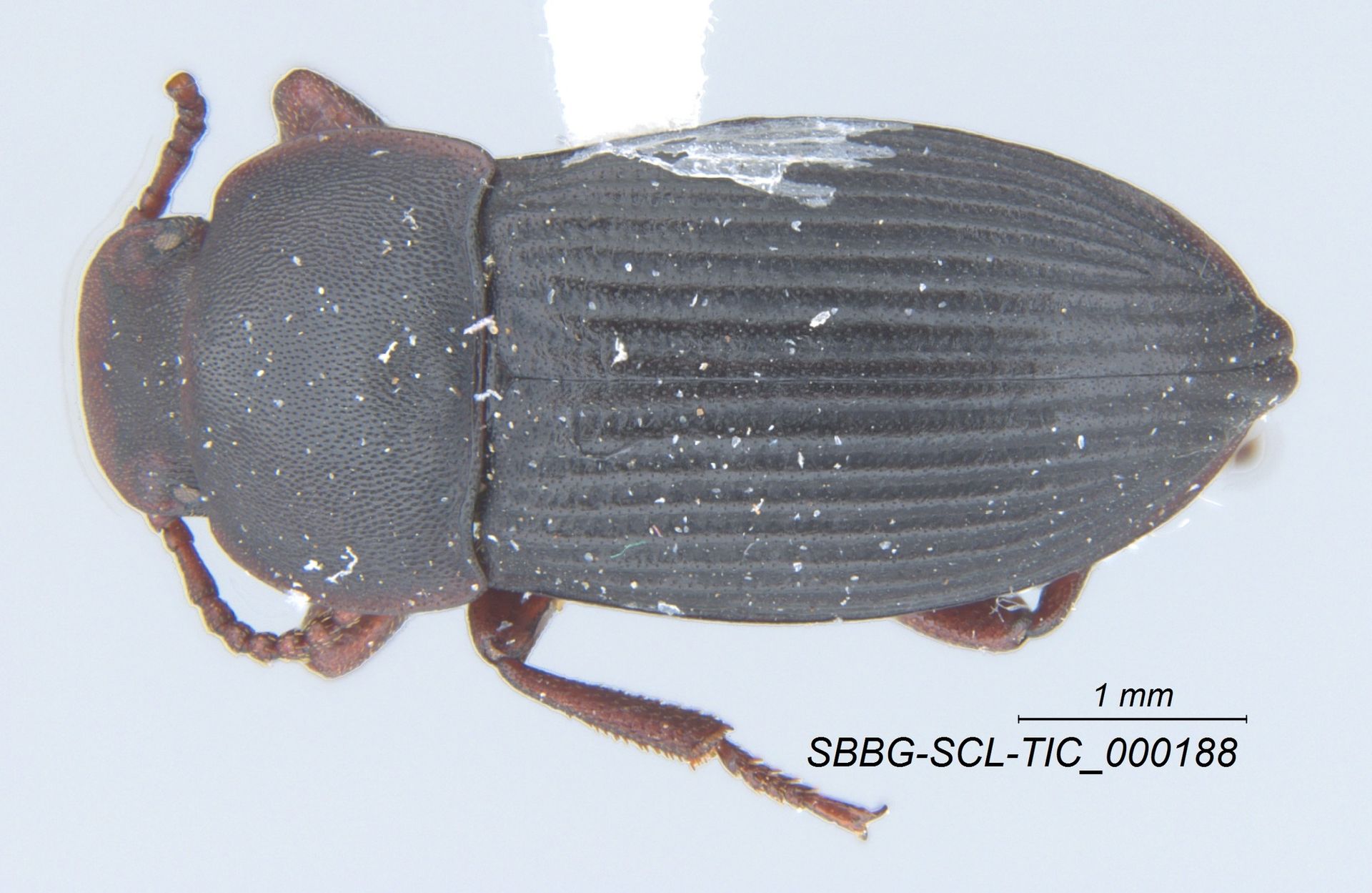
1Tonibius is a of darkling beetles in the Tenebrionidae, established by Thomas L. Casey in 1895. The genus is native to the Nearctic region, with records primarily from western North America. As a member of the diverse Tenebrionidae family, these beetles are adapted to arid and semi-arid environments. The genus remains relatively poorly documented in public sources, with limited -level information available.
Pronunciation
How to pronounce Tonibius: //toʊˈnɪbiəs//
These audio files are automatically generated. While they are not always 100% accurate, they are a good starting point.
Identification
Tonibius can be recognized as small to medium-sized darkling beetles within the Tenebrionidae . Specific diagnostic features distinguishing Tonibius from related Nearctic are not well-documented in accessible literature. Identification to species level requires examination of male genitalia and other subtle morphological characters, necessitating taxonomic resources.
Images
Habitat
in this have been collected in arid and semi-arid characteristic of western North American darkling beetle faunas. Specific microhabitat preferences remain undocumented.
Distribution
Nearctic region, with records from western North America including the southwestern United States.
Ecological Role
As with other Tenebrionidae, Tonibius likely function as in arid , contributing to decomposition processes and serving as prey for various and small vertebrates.
Similar Taxa
- Tenebrionidae (family)Tonibius is one of many in this large ; it can be distinguished from other darkling beetle genera by subtle morphological characters of the , pronotum, and , though these require detailed examination.
- Other Nearctic Tenebrionidae generaDistinguished by combinations of antennal structure, pronotal shape, and elytral sculpturing; precise differentiation requires reference to original taxonomic descriptions.
More Details
Taxonomic history
The was described by Thomas L. Casey, a prolific American entomologist known for describing numerous in the late 19th and early 20th centuries. The etymology of the name is not documented in readily accessible sources.
Data limitations
Publicly available information on this is sparse. GBIF records indicate presence in the Nearctic but provide limited detail. iNaturalist shows 31 observations, suggesting the genus is encountered infrequently or identification is challenging for non-.