
Neobaphion planipenne
(LeConte, 1866)
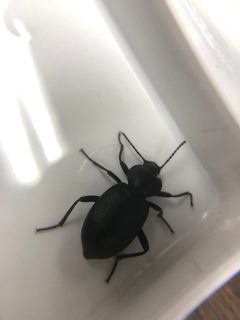
Neobaphion planipenne is a of darkling beetle in the Tenebrionidae, described by John Lawrence LeConte in 1866. It belongs to a with limited documented species, and like other members of Tenebrionidae, it exhibits morphological adaptations associated with arid or semi-arid environments. The species name 'planipenne' refers to the flattened (plane) wing condition. Documentation of this species in scientific literature and biodiversity databases remains sparse.
Pronunciation
How to pronounce Neobaphion planipenne: /ˌniːoʊˈbæfiˌɒn ˌplænəˈpɛni/
These audio files are automatically generated. While they are not always 100% accurate, they are a good starting point.
Images
Distribution
Documented from western North America, with records from the southwestern United States. Specific state-level occurrences include California based on collection records.
More Details
Taxonomic Notes
The Neobaphion is classified within Tenebrionidae, a large of beetles commonly known as darkling beetles. The specific epithet 'planipenne' (from Latin 'planus' = flat, 'penna' = wing) describes a characteristic wing . The authority citation (LeConte, 1866) indicates this was among the many beetles described by the prolific 19th-century American entomologist John Lawrence LeConte.