
Eleodes carbonaria
(Say, 1823)
desert stink beetle
Species Guides
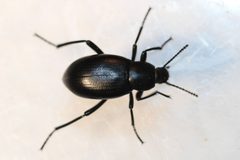
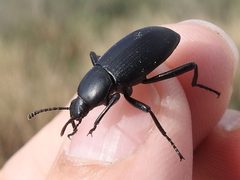
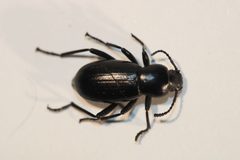
2Eleodes carbonaria is a of darkling beetle in the Tenebrionidae, commonly referred to as a desert stink beetle. It belongs to the Eleodes, a group known for their defensive -standing when threatened. The species has been documented with multiple across North America, indicating considerable geographic variation. Like other members of its genus, it is primarily associated with arid and semi-arid environments.
Pronunciation
How to pronounce Eleodes carbonaria: /ɛˈleɪoʊdiːz ˌkɑrbəˈnɛəriə/
These audio files are automatically generated. While they are not always 100% accurate, they are a good starting point.
Images
Habitat
Arid and semi-arid environments including deserts and dry grasslands. Associated with sandy or loose soils suitable for burrowing.
Distribution
Recorded from Mexico (MX) based on distribution data. The presence of named (including E. c. chihuahuaensis, E. c. nuevoleonensis) suggests a broader range extending into the southwestern United States, though specific locality records require verification.
Behavior
Members of the Eleodes are known for a distinctive defensive : when threatened, they raise their and lower their to the ground in a 'head-stand' posture. This is often accompanied by the release of defensive secretions from abdominal glands, earning them the 'stink beetles' or 'clown beetles'.
More Details
Subspecies diversity
Eleodes carbonaria exhibits notable subspecific diversity with at least eight recognized : E. c. carbonaria, E. c. chihuahuaensis, E. c. disjuncta, E. c. knausii, E. c. nuevoleonensis, E. c. obsoleta, E. c. omissoides, E. c. omissa, and E. c. soror. This subspecific variation likely reflects to different local environments across its range.
Taxonomic history
The was originally described by Thomas Say in 1823, making it one of the earlier described members of the Eleodes. Several were described by later authors including Champion (1884), Blaisdell (1909, 1935), LeConte (1858), and Triplehorn and Thomas (2012).