
Hymenorus
comb-clawed beetle
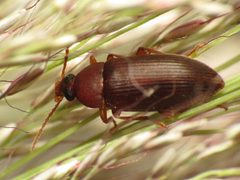
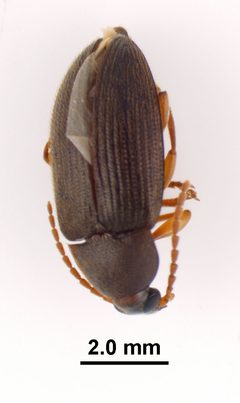
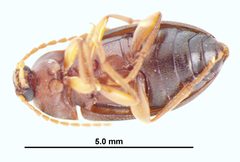
Hymenorus is a of comb-clawed beetles in the Alleculinae, Tenebrionidae. These beetles were formerly classified in their own family Alleculidae before being subsumed into Tenebrionidae. They do not resemble 'classic' darkling beetles and represent one of several groups that complicate identification of this family. The 'sp-two-eastern' designation suggests an undescribed or provisionally identified found in eastern North America.
Pronunciation
How to pronounce Hymenorus: //ˌhaɪˈmɛnəˌrʊs ˌspiː tuː ˈiːstərn//
These audio files are automatically generated. While they are not always 100% accurate, they are a good starting point.
Identification
Hymenorus can be distinguished from typical darkling beetles by their comb-clawed structure and overall that does not match the 'classic' darkling beetle form. Unlike the bead-like of many tenebrionids, Hymenorus antennae may appear more filamentous, though this varies. The was formerly placed in Alleculidae, and its members lack the concealed and slow, lumbering movement characteristic of many better-known darkling beetles like Eleodes. Distinguishing Hymenorus from ground beetles (Carabidae) requires examining mandible exposure—Hymenorus has concealed mandibles beneath the , unlike the exposed, forward-directed jaws of carabids.
Images
Distribution
Eastern North America (based on 'sp-two-eastern' designation in the provided name).
Similar Taxa
- Statira (Lagriinae)Both are former independent now classified within Tenebrionidae; both lack classic darkling beetle and complicate field identification of the family.
- Eleodes (Tenebrioninae)Eleodes represents the 'classic' darkling beetle form that Hymenorus does not resemble, making the two easily confused at level despite different .
- Ground beetles (Carabidae)Hymenorus may be mistaken for ground beetles due to more active movement and less robust build than typical tenebrionids; concealed help distinguish from carabids.