
Elacatis
Pascoe, 1860
false tiger beetles
Species Guides
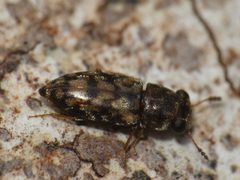
4Elacatis is a of false tiger in the Salpingidae, containing approximately 13 described . The genus was established by Pascoe in 1860. Seven species are recognized in the Nearctic region north of Mexico, including two recently described species: E. larsoni from Nebraska and E. stephani from Arizona. The genus is classified within the Othniinae.
Pronunciation
How to pronounce Elacatis: /eɪˈlækətɪs/
These audio files are automatically generated. While they are not always 100% accurate, they are a good starting point.
Identification
Identification of Elacatis relies on examination of external and male genital structures. A key to the seven Nearctic species (Canada and United States) has been published, supplemented with habitus photographs and images of selected structural features. Specific diagnostic characters vary by species and require detailed morphological analysis.
Images
Habitat
For E. umbrosus: associated with dead or dying conifers in western North America. preferences for other are not well documented.
Distribution
Nearctic region north of Mexico, including Canada and the United States. Specific documented localities include: western North America (E. umbrosus), Nebraska Box Butte County (E. larsoni), and Arizona Cochise County (E. stephani). Two , E. senecionis and E. immaculatus, have been recorded from north of Mexico for the first time in recent revisions.
Diet
For E. umbrosus only: larvae are thought to be , feeding on dead wood; are very likely . Diet for other Elacatis is not documented.
Host Associations
- dead/dying conifers - /larval substratespecifically for E. umbrosus in western North America
Similar Taxa
- OthniusHistorical confusion with Elacatis; the new synonymy Othnius umbrosus = Othnius lugubris was proposed, with the valid name being E. umbrosus (LeConte). These share placement (Othniinae) and require careful morphological distinction.
More Details
Taxonomic revision
The Nearctic were comprehensively revised in 2018 (Zootaxa 4420: 3.1), resulting in recognition of seven species, description of two new species, and proposal of one new synonymy.
Larval biology uncertainty
The diet of larval E. umbrosus is inferred from association with dead conifers rather than direct observation of feeding .