
Salpingidae
Leach, 1815
Narrow-waisted Bark Beetles
Genus Guides
6- Aegialites
- Aglenus
- Dacoderinae
- Elacatis(false tiger beetles)
- Eleusima
- Salpinginae(narrow-waisted bark beetles)
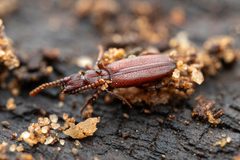
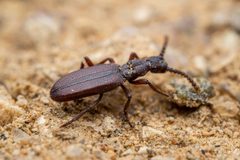
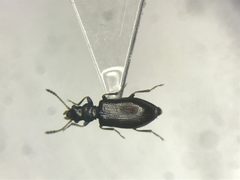
is a of small beetles in the superfamily Tenebrionoidea, commonly known as . The family comprises approximately 45 and 300 distributed globally, with greatest diversity in temperate regions of both hemispheres. Species range from 1.5 to 7 mm in length and are primarily associated with dead or dying wood, where they feed on fungi, organic matter, and occasionally other insects.
Pronunciation
How to pronounce Salpingidae: //sælˈpɪŋɡɪˌdiː//
These audio files are automatically generated. While they are not always 100% accurate, they are a good starting point.
Identification
Distinguished from similar Tenebrionoidea by the narrow, constricted waist. May be confused with Trogossitidae (bark-gnawing beetles), but lack the agility and metallic iridescence common in that family. Distinguished from Tenebrionidae (darkling beetles) by the narrow body form and, in many , the concealed antennal base. The elongated rostrum of Rhinosimus is distinctive. Boridae, formerly included within Salpingidae, were separated based on molecular and morphological data; Boridae have only two North American versus approximately 45 in Salpingidae.
Images
Habitat
Primarily saproxylic, associated with dead or dying wood of both deciduous trees and conifers. Found under bark, in decaying wood, and in moist, white-rotted wood near or below ground level. Some occupy unusual : Aegialites and Antarcticodomus occur in coastal intertidal zones, with Aegialites feeding on . Rhinosimus viridiaeneus prefers dead branches of red alder. Elacatis umbrosus is associated with fire-killed conifers 3–5 years post-fire.
Distribution
Global distribution with approximately 300 in 45 . Greatest representation in temperate regions of both Northern and Southern Hemispheres. Documented from North America (including Canada and United States), Europe (Bulgaria, Greece), and other regions. Specific records include Vancouver Island (British Columbia), Maritime Provinces of Canada, Nebraska, Arizona, and Colorado.
Diet
Varied feeding habits documented: and larvae of Rhinosimus viridiaeneus feed on inner bark of dead red alder branches. Larvae of Elacatis umbrosus are thought to be (wood-feeding), while adults are likely . Some feed on ascomycete and hyphomycete fungi. Aegialites feeds on in intertidal .
Host Associations
- Alnus rubra Bong. - food sourcered alder, dead branches, inner bark
- dead/dying conifers - Elacatis umbrosus and related
- fire-killed Ponderosa pine - 3-5 years post-fire, moist decayed root systems
- ascomycete fungi - food source-level association
- hyphomycete fungi - food source-level association
- algae - food sourceAegialites in intertidal zones
Life Cycle
Larvae of some described; larval Elacatis umbrosus associated with moist, decayed wood in root systems of fire-killed trees. Complete (, larva, pupa, ) inferred from Coleoptera but specific details not documented for most species.
Behavior
of Rhinosimus viridiaeneus use their elongated, flattened rostrum to insert between outer bark and cambium for feeding, and also to prod or flip away intruding conspecifics from feeding sites. Some are slow-moving.
Ecological Role
Saproxylic beetles contributing to decomposition of dead wood and nutrient cycling in forest . Association with fungi suggests role in fungal spore . Discussed in context of forest management impacts on saproxylic insect .
Human Relevance
Not considered forest pests despite suggesting bark beetle association. No documented economic importance. Of interest to entomologists due to obscurity and specialized requirements. Fire-killed conifer habitat makes some indicators of post-fire recovery.
Similar Taxa
- BoridaeFormerly included within ; separated based on molecular and morphological data. Boridae have only two North American (Lecontia and Boros) versus ~45 in Salpingidae, and are specifically associated with charred conifer timber.
- TrogossitidaeSimilar bark-associated habits, but Trogossitidae are more agile, often iridescent or metallic, and lack the narrow waist of .
- TenebrionidaeShare bead-like and some superficial similarities, but Tenebrionidae typically have broader, less constricted bodies and lack the specialized rostrum seen in some .
Misconceptions
The '' leads to confusion with true bark beetles (Scolytinae, Curculionidae), which are economically important forest pests. are not closely related to Scolytinae and are not destructive pests; most are benign saproxylic insects.
More Details
Taxonomic History
Boridae were previously classified as a or tribe within but were elevated to status based on molecular and morphological studies. This reclassification explains older literature references to 'borids' as salpingids.
Collection Challenges
Many are rarely collected due to specialized microhabitat requirements (e.g., fire-killed trees at specific decay stages, intertidal zones). Knowledge of habits and remains limited for most of the .
Conservation Relevance
As saproxylic beetles dependent on dead wood, are vulnerable to forest management practices that remove coarse woody debris. Their presence indicates intact decomposition processes in forest .
Sources and further reading
- BugGuide
- Wikipedia
- GBIF taxonomy match
- iNaturalist taxon
- NCBI Taxonomy
- Catalogue of Life
- Bug Eric: Borids Are Not Bor-ing
- THE LARVA AND ADULT BIOLOGY OFRHINOSIMUS VIRIDIAENEUS(COLEOPTERA: SALPINGIDAE)
- Review of the Nearctic (north of Mexico) species of Elacatis Pascoe (Coleoptera: Salpingidae: Othniinae)
- The Mycteridae, Boridae, Pythidae, Pyrochroidae, and Salpingidae (Coleoptera: Tenebrionoidea) of the Maritime Provinces of Canada
- Review of the families Mycteridae, Pythidae and Salpingidae (Coleoptera, Tenebrionoidea) of Bulgaria
- Contribution to the Salpingidae (Coleoptera, Tenebrionoidea) of Greece including new faunistic records and ecological data on a poorly studied family