
Ripiphorus columbianus
W.J. Brown, 1930
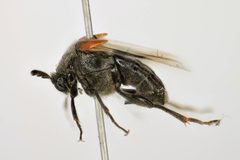
Ripiphorus columbianus is a of wedge-shaped beetle in the Ripiphoridae, described by W.J. Brown in 1930. Members of this are known for their unusual involving and relationships with bees and . The species is documented from western North America, particularly British Columbia. Like other ripiphorids, are typically short-lived and do not feed.
Pronunciation
How to pronounce Ripiphorus columbianus: /rɪˈpɪfərəs kəˌlʌmˈbiənəs/
These audio files are automatically generated. While they are not always 100% accurate, they are a good starting point.
Images
Distribution
Known from British Columbia, Canada, with broader distribution likely in western North America. GBIF records indicate presence in North America.
Life Cycle
Ripiphorus exhibit : first instar larvae are active triungulins that seek out nests, subsequent instars are endoparasitoids within host larvae, and final instars emerge to pupate in soil.
Ecological Role
As of bees and , likely functions as a regulator of hymenopterans.