
Pyrochroinae
Latreille, 1806
fire-colored beetles
Genus Guides
3- Dendroides(fire-colored beetle)
- Neopyrochroa(fire-colored beetles)
- Schizotus(fire-colored beetles)
Pyrochroinae is a of Pyrochroidae comprising fire-colored beetles distinguished by their often vivid red, orange, or yellow coloration. The subfamily includes such as Pyrochroa, Pseudopyrochroa, Hemidendroides, and Pseudodendroides. Larvae are saproxylic, developing beneath bark and in decaying woody debris of dead trees. of at least some are canthariphilous, exhibiting specialized cranial gland apparatuses associated with sexual involving compounds.
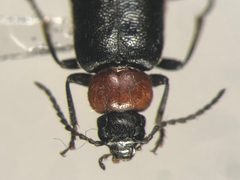
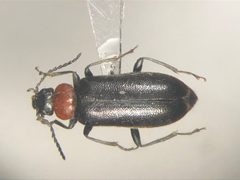
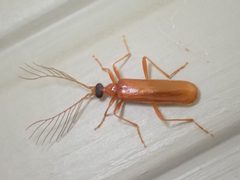
Pronunciation
How to pronounce Pyrochroinae: /paɪroʊˈkraɪniː/
These audio files are automatically generated. While they are not always 100% accurate, they are a good starting point.
Identification
often display bright red, orange, or yellow coloration. Males possess a cranial pit apparatus with associated glands, a diagnostic feature of the . Larvae are elongate, sclerotized, and adapted for life under bark.
Images
Habitat
Larvae inhabit subcortical spaces and coarse decaying woody debris of dead standing trees and logs, primarily in mesic montane forests. Specific trees include Cyclobalanopsis glauca and other hardwoods.
Distribution
occur across the Palearctic and Oriental regions, with documented records from Turkey, Southwest China (Sichuan, Guizhou, Xizang), and Taiwan.
Life Cycle
Complete with , larval, pupal, and stages. Larvae develop beneath bark and in decaying wood; occurs within the larval . Rearing studies confirm development from larva to adult under laboratory conditions.
Behavior
of Pyrochroa coccinea possess cranial apparatus glands implicated in sexual , likely involving acquisition or distribution. Larvae are cryptic, remaining beneath bark or within wood debris.
Ecological Role
Saproxylic decomposers; larvae contribute to nutrient cycling in dead wood. Conservation significance noted in relation to forest and the "Mountains of Southwest China" biodiversity hotspot.
Similar Taxa
- Pyrochroidae: other subfamiliesPyrochroinae distinguished by cranial pit apparatus in males and specific larval associations with subcortical ; other pyrochroid lack these combined features.
Sources and further reading
- BugGuide
- iNaturalist taxon
- Catalogue of Life
- Description of the mature larva of Pseudopyrochroa depressa (Pic) (Coleoptera: Pyrochroidae: Pyrochroinae), with comparison to other Taiwanese Pseudopyrochroa
- Transfer of Pyrochroa daglariensis to Hemidendroides Ferrari (Coleoptera: Pyrochroidae: Pyrochroinae), with a dichotomous key to the four species of the genus
- A new species of Pseudopyrochroa Pic, 1906 from Southwest China (Coleoptera: Pyrochroidae: Pyrochroinae) based on the last instar larva and adults, with natural history observations
- Descriptions of the mature larva and adult female of Pseudopyrochroa girardi Young from Southwest China (Coleoptera: Pyrochroidae: Pyrochroinae), with natural history observations
- Descriptions of the mature larva and pupa of Pseudopyrochroa facialis (Fairmaire) from Southwest China (Coleoptera: Pyrochroidae: Pyrochroinae), with redescriptions of adult stages and notes on natural history
- Descriptions of the mature larvae for two species of Pseudopyrochroa from Taiwan (Coleoptera: Pyrochroidae: Pyrochroinae), with notes on their natural history
- The cranial apparatus glands of the canthariphilous Pyrochroa coccinea (Coleoptera: Pyrochroidae: Pyrochroinae), and their implications in sexual behaviour
- A new species of Pseudodendroides Blair, 1914 (Coleoptera, Pyrochroidae, Pyrochroinae) from China, with a key to the species.
- Oblatopyrochroabellula, an enigmatic new genus and species of Pyrochroinae (Coleoptera, Pyrochroidae) from Xizang, China.
- The Adult, Larva, and Pupa of a New Pseudopyrochroa (Coleoptera: Pyrochroidae: Pyrochroinae) from China, with Molecular Phylogenetic Inferences.