
Sisenes championi
Horn, 1896
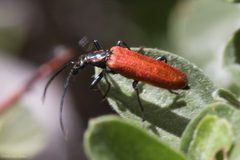
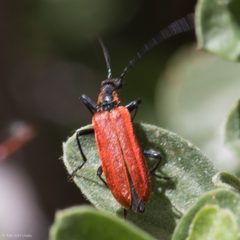
Sisenes championi is a of false blister beetle belonging to the Oedemeridae, first described by Horn in 1896. It is native to North America. The Sisenes is part of a family commonly known as false blister beetles or false oil beetles, though specific ecological and behavioral details for this particular species remain poorly documented in available literature.
Pronunciation
How to pronounce Sisenes championi: //ˈsaɪsiːniːz ˈʃæmpiˌoʊnaɪ//
These audio files are automatically generated. While they are not always 100% accurate, they are a good starting point.
Identification
As a member of Oedemeridae, Sisenes championi likely shares -level characteristics including soft, flexible and slender body form typical of false blister beetles. However, -level diagnostic features distinguishing S. championi from are not documented in the provided sources. Identification to species would require examination of male genitalia and other subtle morphological characters standard for the family.
Images
Distribution
North America. Specific country-level distribution records are not available beyond this continental designation.
Similar Taxa
- Other Sisenes speciesCongeneric within Sisenes would share general body plan and require detailed examination of genitalic and other subtle morphological characters for reliable separation.
- Other Oedemeridae generaMembers of related in Oedemeridae share the soft-bodied, slender form characteristic of false blister beetles, necessitating careful study of antennal structure, tarsal formula, and male genitalia for correct generic assignment.
More Details
Taxonomic authority
The was described by George Henry Horn in 1896, a prominent American entomologist of the late 19th century.
Data availability
As of the knowledge cutoff, GBIF records indicate 17 observations of this , suggesting it is either genuinely rare or undercollected, or potentially misidentified in collections.