
Glipa oculata
(Say, 1824)
Eye-spotted Tumbling Flower Beetle
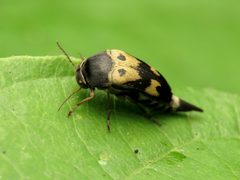
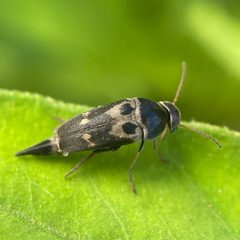
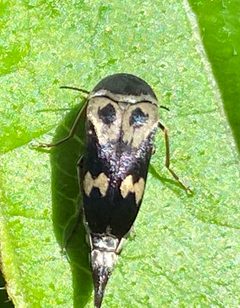
Glipa oculata is a of tumbling flower beetle in the Mordellidae, described by Thomas Say in 1824. It is commonly known as the -spotted Tumbling Flower Beetle. The species belongs to a family characterized by their distinctive tumbling escape and wedge-shaped bodies adapted for living in flowers.
Pronunciation
How to pronounce Glipa oculata: /ˈɡlɪpə oʊˈkjuːlɑːtə/
These audio files are automatically generated. While they are not always 100% accurate, they are a good starting point.
Identification
As a member of Mordellidae, G. oculata likely exhibits the 's diagnostic wedge-shaped body form, with the scutellum visible and hind legs modified for jumping. The "-spotted" suggests the presence of distinct ocellate markings, though this requires verification. Tumbling flower beetles are distinguished from similar small beetles by their habit of falling and tumbling when disturbed, combined with their elongated, pointed that extends beyond the .
Images
Habitat
Based on characteristics, likely associated with flowers and decaying plant material. The tumbling flower beetle family is typically found in diverse flowering plant .
Distribution
Recorded from North America, specifically present in Ontario, Canada. The was described by Thomas Say, an American entomologist, suggesting a broader North American range.
Behavior
Exhibits the characteristic tumbling escape response typical of Mordellidae: when disturbed, these beetles fall from vegetation and tumble erratically, making them difficult for to capture.
Similar Taxa
- Other MordellidaeMembers of the same share the wedge-shaped body, visible scutellum, tumbling , and association with flowers. -level identification requires examination of specific morphological characters such as antennal structure and body proportions.
- RipiphoridaeSome ripiphorid beetles share a superficially similar body shape and association with flowers, but differ in larval (typically ) and antennal structure.
More Details
Taxonomic History
The was originally described in 1824 by Thomas Say, though some sources cite 1835. GBIF records confirm the accepted authority as (Say, 1824).
Observation Data
iNaturalist records 664 observations for this , indicating it is moderately well-documented by citizen scientists, though detailed biological studies appear limited in the available literature.