
Epicauta costata
(LeConte, 1854)
Four-ribbed Blister Beetle
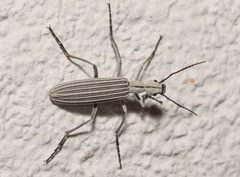
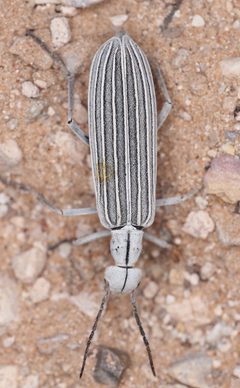
Epicauta costata is a blister beetle in the Meloidae, commonly known as the Four-ribbed Blister Beetle. The was described by LeConte in 1854. It is distributed across Central America and North America. Like other meloids, it produces , a defensive compound that causes blistering upon contact with skin.
Pronunciation
How to pronounce Epicauta costata: /ˈɛpɪˌkɔːtə kɒˈsteɪtə/
These audio files are automatically generated. While they are not always 100% accurate, they are a good starting point.
Identification
The specific epithet "costata" (meaning "ribbed") likely refers to elytral , though detailed diagnostic features distinguishing this from are not documented in the available sources. The "Four-ribbed Blister Beetle" suggests four distinct longitudinal ridges or costae on the .
Images
Habitat
Has been observed in association with herbicide-treated Kali tragus (prickly Russian thistle) in disturbed roadside . Also recorded at night near modestly lit structures in park settings.
Distribution
Central America and North America. Specific records include New Mexico (Deming area) and southwestern U.S. desert regions.
Seasonality
have been recorded in late July. Activity appears to peak during summer months in desert regions.
Host Associations
- Kali tragus - found onherbicide-treated plants
Behavior
have been observed in large on plants. activity has been documented, with individuals attracted to artificial lighting.
Human Relevance
As with all blister beetles, produces which can cause dermatitis upon contact with skin. The name has been misapplied or confused in some literature (see misconceptions).
Similar Taxa
- Epicauta segmentaBoth are Epicauta found in similar and regions; E. segmenta was collected in the same general area (Van Horn, Texas) during the same collecting trip
- Epicauta costipennisSimilar name may cause confusion; E. costipennis is a South American species while E. costata occurs in North and Central America
Misconceptions
The name "Epicauta costata" has been used in some contexts where "costipennis" may have been intended, given that both names refer to ribbed/costate features. The South American E. costipennis (described by Borchmann) is a distinct from the North/Central American E. costata (LeConte).
More Details
Specimen holdings
The Entomology Research Museum at the University of California, Riverside holds 274 specimens of this as of April 2010, indicating it is relatively well-represented in collections.
Etymology
The specific epithet "costata" derives from Latin "" (rib), referring to the ridged or costate characteristic of this .