
Spilotus quadripustulatus
(Melsheimer, 1846)
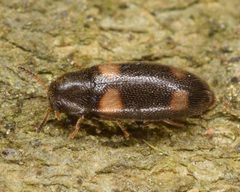
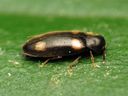
Spilotus quadripustulatus is a in the Melandryidae, a group commonly known as false darkling beetles. The species was described by Melsheimer in 1846. It is known from eastern Canada, with documented occurrences in New Brunswick, Nova Scotia, and Quebec. The specific epithet 'quadripustulatus' refers to four spots or markings, likely describing a distinctive pattern on the .

Pronunciation
How to pronounce Spilotus quadripustulatus: /ˈspiː.lə.təs ˌkwɑːd.rə.pʊs.tjʊˈlɑː.təs/
These audio files are automatically generated. While they are not always 100% accurate, they are a good starting point.
Identification
The name 'quadripustulatus' suggests the presence of four distinct spots or pustule-like markings, likely on the . As a member of Melandryidae, it likely has an elongate body form with somewhat soft, flexible elytra compared to many other . Positive identification requires comparison with and other Melandryidae; the four-spot pattern may serve as a distinguishing feature from related species.
Images
Distribution
Eastern Canada: confirmed records from New Brunswick, Nova Scotia, and Quebec.
More Details
Taxonomic history
Originally described by Melsheimer in 1846, this has remained in the Spilotus within Melandryidae. The family Melandryidae (false darkling beetles) was historically included within Tenebrionidae but is now recognized as distinct.
Observation frequency
The has relatively few documented observations (37 records on iNaturalist as of source date), suggesting it may be genuinely uncommon, undercollected, or restricted to specific in its range.