
Boros
Herbst, 1797
Species Guides
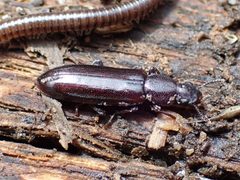
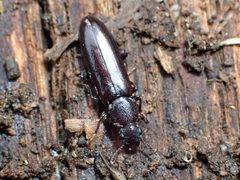
1- Boros unicolor(conifer bark beetle)
Boros is a of conifer bark beetles in the Boridae, first described by Herbst in 1797. Members of this genus are classified within the superfamily Tenebrionoidea. The genus is distinguished from related by morphological features associated with their specialized in coniferous . Boros represents one of the few genera in the small family Boridae, which contains adapted to living under bark of conifers.
Pronunciation
How to pronounce Boros: /ˈbɔ.roʊs/
These audio files are automatically generated. While they are not always 100% accurate, they are a good starting point.
Identification
Boros can be distinguished from other Boridae by a combination of characters: body form typically elongate and somewhat flattened; with distinct club; pronotum with characteristic lateral margins. Separation from the related Boromorphus relies on subtle differences in antennal structure and pronotal shape. are small to medium-sized beetles, generally dark in coloration. Detailed identification to species level requires examination of male genitalia and microsculpture patterns.
Images
Habitat
Strictly associated with coniferous forests. and larvae inhabit spaces beneath bark of dead or dying conifers, particularly of Pinus and related . The genus shows fidelity to conifer and is not recorded from broadleaf trees.
Distribution
Recorded from northern Europe (Norway, Sweden) based on GBIF distribution data. The likely has a broader Palearctic distribution consistent with conifer forest ranges, though precise limits require verification.
Host Associations
- Pinus - breeds under bark of dead/dying treesprimary conifer
Ecological Role
Decomposer in conifer forest . By colonizing dead and dying conifers, contributes to nutrient cycling and wood decomposition. Saproxylic habit supports forest ecosystem processes.
Human Relevance
No significant direct economic impact. Not a major pest of living timber. Presence indicates conifer forest condition and may serve as an indicator of saproxylic diversity.
Similar Taxa
More Details
Taxonomic note
The Boridae is a small, morphologically distinct group within Tenebrionoidea, with Boros as the type . The family's phylogenetic position has been historically debated but molecular and morphological data support placement within Cucujiformia.