
Anthicus cervinus
LaFerté-Senéctère, 1848
cloudy flower beetle
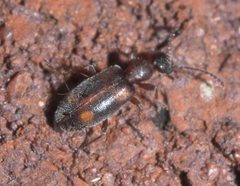
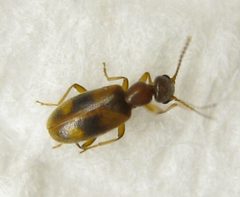
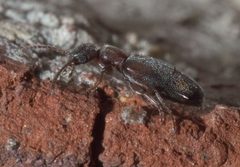
Anthicus cervinus, commonly known as the cloudy flower , is a of antlike flower beetle in the Anthicidae. It is native to North and Central America, with documented records from Canada through the United States to Central America. The species exhibits the characteristic -like appearance typical of the Anthicus, with a narrow, elongate body form and relatively long legs. As a member of the Anthicidae, it is associated with flowers and surrounding vegetation where are typically encountered.
Pronunciation
How to pronounce Anthicus cervinus: //ˈænθɪkʊs sɛrˈviːnəs//
These audio files are automatically generated. While they are not always 100% accurate, they are a good starting point.
Identification
Distinguished from other Anthicus by the cloudy, mottled pattern on the . The -like body form with constricted pronotum separates it from other small , but species-level identification requires examination of genitalia and other fine structural details. Similar to other Anthicidae but generally larger than many . May be confused with small carabid beetles or other ant-mimicking beetles, but the and body proportions are distinctive.
Images
Appearance
Small, -like with narrow, elongate body and relatively long legs. The typically show a mottled or cloudy coloration, giving rise to the . are (thread-like) and moderately long. The pronotum is constricted at the base, contributing to the ant-mimicking profile. Body coloration ranges from brown to blackish with lighter, irregular markings.
Habitat
Found in association with flowers and surrounding vegetation. occur in diverse terrestrial including grasslands, open woodlands, and agricultural areas where flowering plants are present. Specific microhabitat preferences are poorly documented.
Distribution
North America and Central America. Documented from Canada (Alberta, British Columbia, Manitoba) through the United States to Central America. The full southern extent of the range in Central America is not precisely defined in available sources.
Similar Taxa
- Other Anthicus speciesMany share the -like body form and occur in similar ; -level identification requires detailed examination
- Small Carabidae (ground beetles)Similar size and ground-dwelling habits, but distinguished by more prominent and different body proportions
- Formicidae (ants)Convergent -mimicry in body form, but distinguished by characteristics including , , and six legs of equal prominence
More Details
Taxonomic authority variation
Sources vary slightly in the citation of the original description: LaFerté-Senéctère, 1848 (GBIF) versus LaFerte-Senectere, 1849 (NCBI). This minor discrepancy reflects standard variations in transliteration and dating of historical publications.