
Notoxus monodon
(Fabricius, 1801)
antlike flower beetle, monoceros beetle
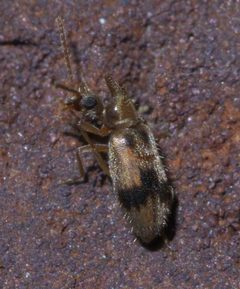
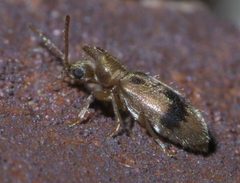
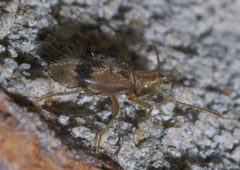
Notoxus monodon is a small in the Anthicidae, commonly called the antlike flower beetle or monoceros beetle. It is one of many in the Notoxus that share a distinctive elongated horn-like projection on the pronotum. The species is documented from North America, where it occurs in association with flowering vegetation. Like other anthicids, it exhibits -mimicking body proportions and movements.
Pronunciation
How to pronounce Notoxus monodon: /nɒˈtɒk.səs ˈmɒn.əˌdɒn/
These audio files are automatically generated. While they are not always 100% accurate, they are a good starting point.
Identification
The single pronotal horn distinguishes N. monodon from many , though some other Notoxus also possess a single horn. Accurate identification to species level requires examination of horn shape, body proportions, and male genitalia. The -like appearance separates Anthicidae from actual ants (Formicidae) by the presence of hardened forewings () and different antennal structure. Distinguished from other small beetles by the combination of elongate body, pronotal horn, and antennal club absent.
Images
Habitat
Associated with flowering vegetation; has been observed at blacklight traps suggesting activity or movement. Specific microhabitat preferences within this general association are not documented.
Distribution
Documented from North America; exact range boundaries not specified in available sources. Distribution records indicate presence across the continent without finer- detail.
Seasonality
have been recorded in late autumn (October-November), suggesting fall activity period. Whether this represents peak season or year-round presence with autumn detectability is unknown.
Behavior
Attracted to ultraviolet light sources, indicating movement or activity. -like locomotion and body form suggest defensive mimicry, though this has not been experimentally verified for this .
Human Relevance
Occasionally encountered by entomologists using blacklight surveys; no documented economic or medical significance.
Similar Taxa
- Other Notoxus speciesMany share the pronotal horn structure; N. monoceros and related may have similar single-horned requiring detailed examination for separation
- Ants (Formicidae)Convergent -mimicry in body shape; distinguished by , with gradual club or no club, and lack of metapleural gland
- Other Anthicidae-level characters shared; Notoxus distinguished by pronotal horn, which is reduced or absent in most other anthicid
More Details
Etymology
Specific epithet 'monodon' refers to the single tooth or horn on the pronotum, from Greek 'mono' (one) and 'odon' (tooth)
Observation method
Documented in blacklight surveys in Kansas in late October, suggesting this is a detectable method for studying the