
Platydracus mysticus
(Erichson, 1840)
Mystic Rove Beetle
Platydracus mysticus is a large rove beetle in the Staphylinidae, native to eastern North America. It is one of the larger in the Platydracus, which includes many of the most conspicuous rove beetles in the region. Like other members of its genus, it is a predatory attracted to decomposing organic matter where it hunts other insects. The species occurs across a broad range of eastern and central North America, from Canada through the United States.
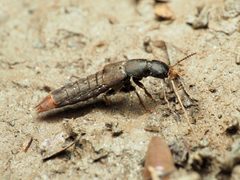
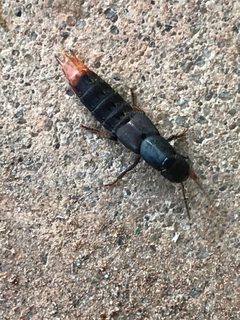
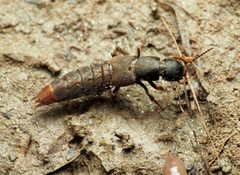
Pronunciation
How to pronounce Platydracus mysticus: //ˌplætɪˈdrækəs ˈmɪstɪkəs//
These audio files are automatically generated. While they are not always 100% accurate, they are a good starting point.
Images
Habitat
Found in moist, decaying organic matter including rotting wood, leaf litter, and decomposing fungi. Associated with human-disturbed including gardens, parks, and areas with accumulated organic debris.
Distribution
Eastern and central North America: Canada (Ontario, Quebec), United States (Arkansas, Connecticut, District of Columbia, Delaware, Iowa, Illinois, Indiana, Kansas, Kentucky, Massachusetts, Maryland, Maine, Michigan, Minnesota, Missouri, Mississippi, North Carolina, Nebraska, New Hampshire, New Jersey, New York, Ohio, Oklahoma, Pennsylvania, Rhode Island, Tennessee, Texas, Virginia, Vermont, Wisconsin).
Diet
Predatory on other insects and , particularly those associated with decomposing organic matter.
Ecological Role
in decomposer , helping regulate of other insects in rotting wood, fungi, and leaf litter.
Human Relevance
Generally beneficial as a of other insects; occasionally found in gardens and human-modified environments.
Similar Taxa
- Platydracus maculosusLarger (22-35 mm) brown rove beetle with similar preferences; distinguished by size and coloration.
- Platydracus speciesMany share similar elongated body form and short ; precise identification often requires examination of minute setal characters.