Quedius mesomelinus
Marsham, 1802
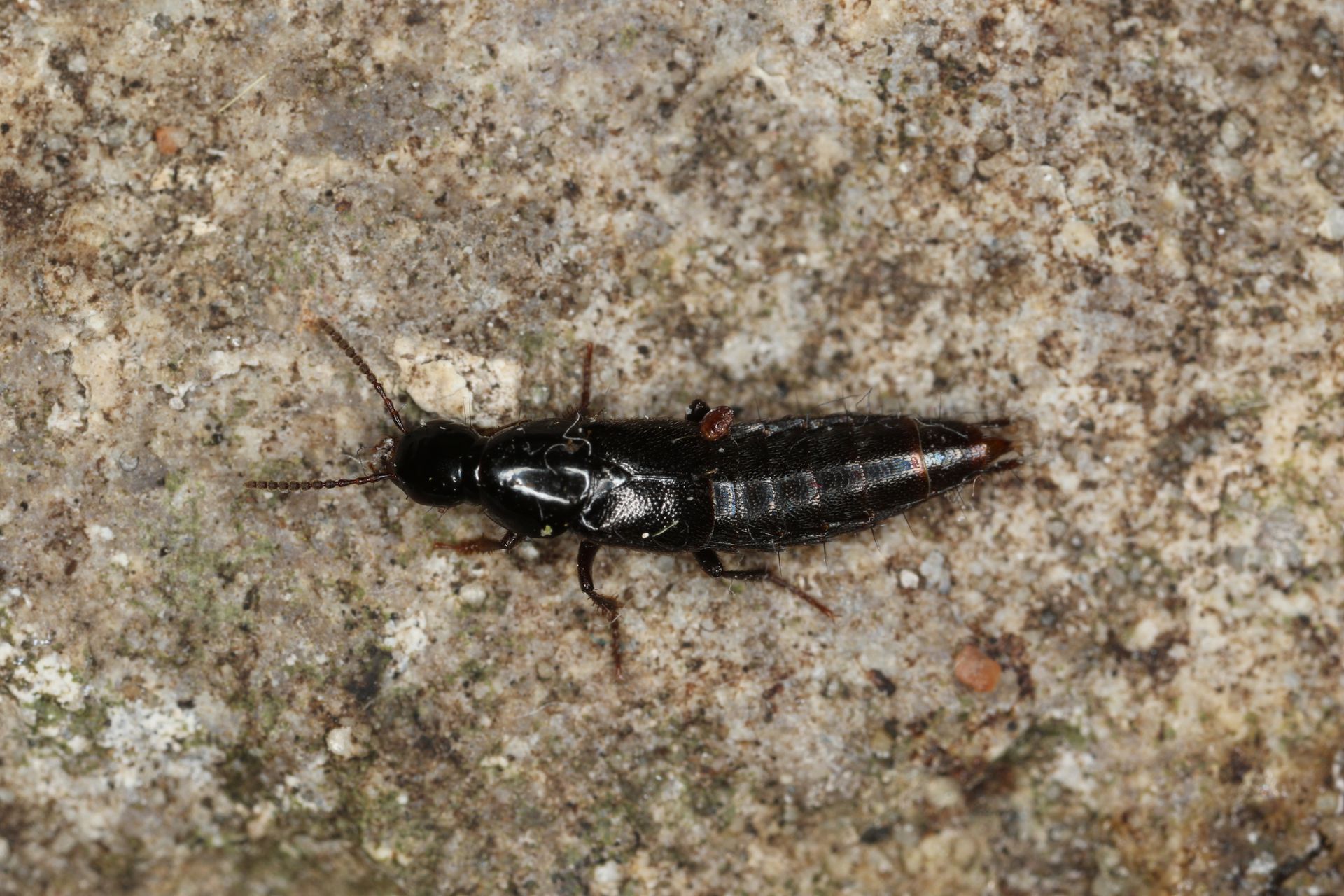
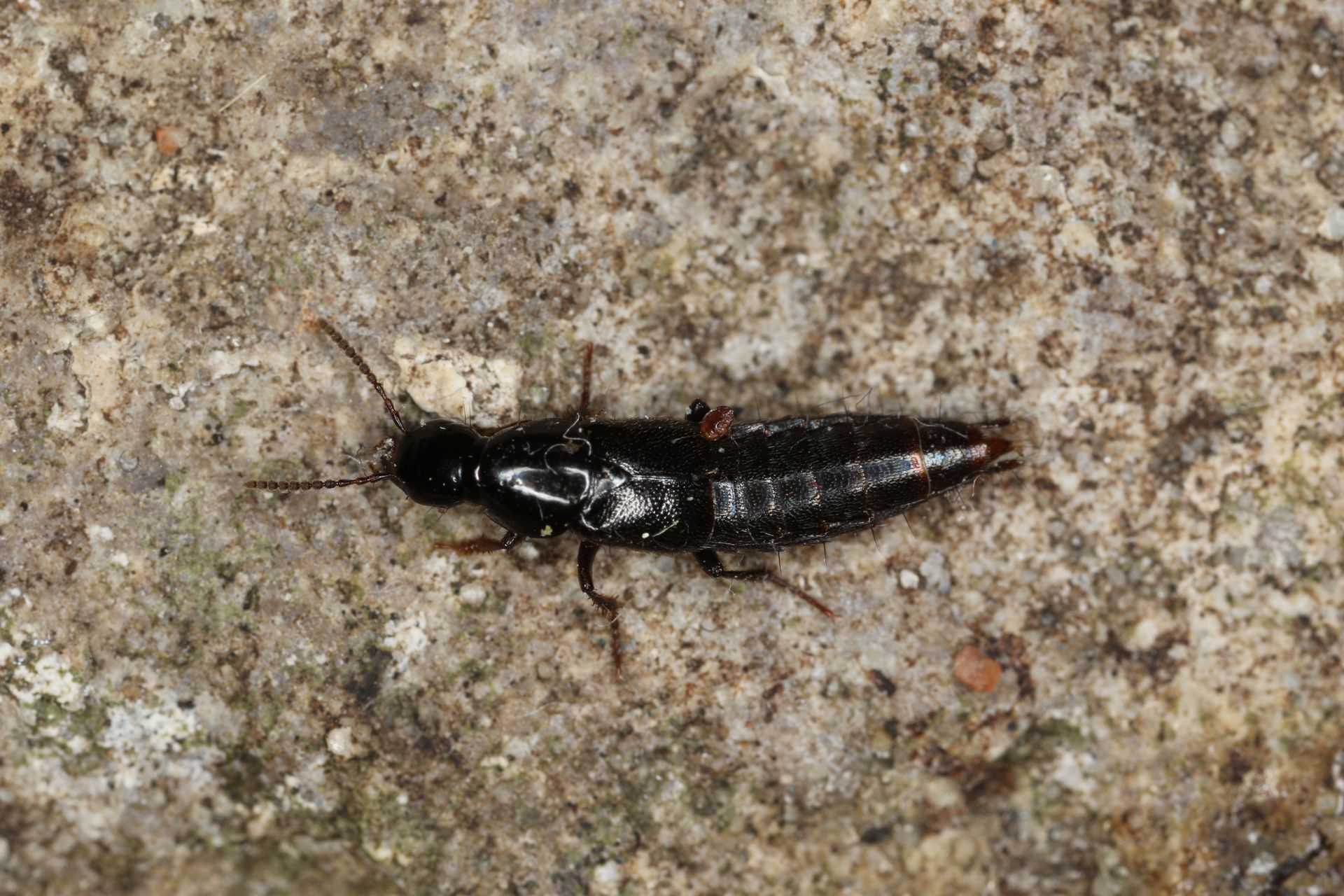
Quedius mesomelinus is a rove beetle (Staphylinidae) originally described from Europe in 1802. The has been widely introduced outside its native range, with established in North America, South America, Australia, New Zealand, and several subantarctic islands. A , Q. m. skoraszewskyi, was described in 1961 but is treated as a synonym. The species belongs to the subgenus Microsaurus within the large Quedius.
Pronunciation
How to pronounce Quedius mesomelinus: //ˈkwiːdiəs ˌmɛsoʊmɛˈlaɪnəs//
These audio files are automatically generated. While they are not always 100% accurate, they are a good starting point.
Images
Distribution
Native to Europe (34 countries), Russia, Turkey, Greenland, and Iceland. Introduced to North America (Canada: Alberta, British Columbia, Labrador, Manitoba, New Brunswick, Newfoundland, Nova Scotia, Ontario, Prince Edward Island, Quebec, Saskatchewan; widespread in USA), South America (Peru, Chile, Falkland Islands), Australia, New Zealand, Tristan da Cunha Islands, and Gough Island.
Human Relevance
Introduced suggest human-mediated , likely through soil or plant material movement. The appears to have established successfully in temperate regions across multiple continents.
More Details
Taxonomic note
Quedius mesomelinus skoraszewskyi Korge, 1961 is listed as a synonym in Catalogue of Life. The is placed in subgenus Microsaurus.
Invasion biology
The geographic pattern—native to Europe with numerous introductions to temperate regions worldwide—indicates this has been a successful colonizer, though specific ecological impacts have not been documented.