
Quediina
Kraatz, 1857
Genus Guides
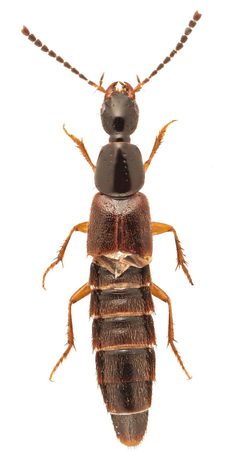
4Quediina is a mega-diverse subtribe of rove beetles (Staphylinidae: Staphylinini) comprising hundreds of globally, with exceptional in north and south temperate regions. The subtribe has historically been defined by convention rather than clear synapomorphies, and recent phylogenetic studies have demonstrated polyphyly, leading to major taxonomic revisions. Formerly quediine from the Afrotropical region have been reassigned to unrelated lineages within Staphylinini. The subtribe includes economically important genera such as Quedius and Bolitogyrus.
Pronunciation
How to pronounce Quediina: //kwɛˈdɪ.iːnə//
These audio files are automatically generated. While they are not always 100% accurate, they are a good starting point.
Identification
Quediina is not reliably diagnosed by unique synapomorphies and has been defined primarily by convention. generally exhibit the characteristic staphylinine body plan with abbreviated exposing most of the . Specific identification requires examination of male genitalia, particularly the structure, and detailed punctation patterns of the pronotum and elytra. The subtribe is currently delimited phylogenetically rather than by clear morphological autapomorphies.
Images
Distribution
-rich in north temperate and south temperate regions of the world; tropical faunas, including the entire Afrotropical region, are notably depauperate. The Quedius does not occur naturally in sub-Saharan Africa. Chinese fauna includes diverse representatives across multiple provinces including Yunnan, Sichuan, Beijing, Hubei, Guangdong, and Hainan. The genus Queskallion occurs in China, Myanmar, and Nepal.
Similar Taxa
- TanygnathininaLinked through phylogenetic intermediates such as Natalignathus; historically confused with Quediina due to shared plesiomorphic characters and convergent in and larval stages.
- StaphylininaFormer quediine such as Euristus have been reassigned to this lineage based on phylogenetic analysis, indicating historical misclassification due to convergent character evolution.
- PhilonthinaFormerly quediine including misidentified of 'Quedius' (Q. angularis, Q. cinctipennis) and Algon have been transferred to Philonthina or its sublineages based on phylogenetic evidence.
Misconceptions
The historically recognized 'bipolar distribution pattern' of Quediina, with supposed absence from tropical regions, has been demonstrated to be an artifact of taxonomic misidentification rather than a genuine biogeographic phenomenon. The Quedius was long thought to occur in sub-Saharan Africa, but these records were based on misidentified now placed in Philonthus. The subtribe Quediina itself is polyphyletic, rendering many historical classifications invalid.
More Details
Phylogenetic instability
Quediina is currently recognized as polyphyletic, with Afrotropical 'quediine' distributed across at least three unrelated lineages within Staphylinini: 'Staphylinina', 'Philonthina propria', and 'Tanygnathinina sensu novo'. The phylogenetic position of Afroquedius remains ambiguous.
Taxonomic revisions
Recent systematic work has resulted in numerous new combinations: Quedius angularis and Quedius cinctipennis transferred to Philonthus; Algon robustus transferred to Moeocerus (with replacement name M. wendeleri due to preoccupation); and establishment of new Natalignathus as a phylogenetic link between Quediina and Tanygnathinina.
Larval morphology
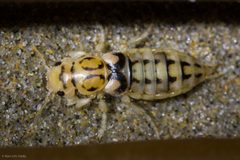
Larvae of some quediine-related exhibit unique morphological features, including special appendages of unknown function on mesothoracic in Atanygnathus—structures unknown elsewhere in Staphylinidae or Coleoptera.
Sources and further reading
- BugGuide
- iNaturalist taxon
- Catalogue of Life
- A new species of Queskallion Smetana, 2015 (Coleoptera, Staphylinidae, Quediina) from China
- Three new species of Quedius elpenor group (Coleoptera: Staphylinidae: Staphylinini: Quediina) from China
- Natalignathus, gen. nov. and larvae of Atanygnathus: a missing phylogenetic link between subtribes Quediina and Tanygnathinina (Coleoptera:Staphylinidae:Staphylininae:Staphylinini)
- Taxonomy of the genus Bolitogyrus Chevrolat (Coleoptera: Staphylinidae: Staphylinini: Quediina) from China with description of seven new species
- Revised systematics and biogeography of ‘Quediina’ of sub‐Saharan Africa: new phylogenetic insights into the rove beetle tribe Staphylinini (Coleoptera: Staphylinidae)
- Contributions to the knowledge of the Quediina (Coleoptera, Staphylinidae, Staphylinini) of China. Part 42. Genus Quedius Stephens, 1829. Subgenus Raphirus Stephens, 1829. Section 10