
Neobisnius jucundus
(Horn, 1884)
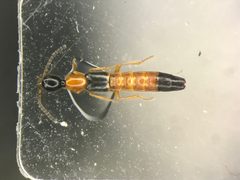
Neobisnius jucundus is a rove beetle in the Staphylinidae, first described by George Henry Horn in 1884. The belongs to the large tribe Staphylinini within the Staphylininae. It has a documented distribution across much of temperate North America, with records spanning from Canada to the eastern and central United States. The Neobisnius is part of the subtribe Philonthina, a group of generally predatory rove beetles.
Pronunciation
How to pronounce Neobisnius jucundus: /niːoʊˈbɪsniəs dʒuːˈkʌndəs/
These audio files are automatically generated. While they are not always 100% accurate, they are a good starting point.
Identification
Members of Neobisnius can be distinguished from related in Philonthina by the combination of: with a distinct basal tooth; pronotum with paired macrosetae on the disc; and male genitalia with distinctive paramere structure. N. jucundus specifically is characterized by its relatively small size (approximately 5–7 mm), dark coloration with often paler elytral bases, and the detailed structure of the , which features a narrow, elongate lobe. Accurate identification to level requires examination of male genitalia or reference to original description and subsequent revisions.
Images
Habitat
Found in moist terrestrial environments including forest leaf litter, riparian zones, and decaying organic matter. Like other Philonthina, likely associated with rich in decomposing vegetation or fungal substrates where prey are abundant.
Distribution
Widespread in temperate North America. Canadian records: Alberta, British Columbia, Manitoba, New Brunswick, Ontario, Saskatchewan. United States records: Alabama, Colorado, Connecticut, District of Columbia, Iowa, Illinois, Kansas, Massachusetts, Maryland, Maine, Michigan, Minnesota, Nebraska, New Hampshire, New Jersey, New York, Pennsylvania, Rhode Island, South Carolina, Virginia.
Ecological Role
As a member of Philonthina, likely functions as a of small in soil and litter , contributing to nutrient cycling and of microarthropods.
Similar Taxa
- Neobisnius palustrisOverlaps in distribution and ; distinguished by differences in male genitalia and subtle body proportions.
- Philonthus speciesSame tribe Philonthina and similar general appearance; Neobisnius differs in mandibular structure and pronotal setal arrangement.
- Bisnius speciesClosely related formerly congeneric with Neobisnius; separated based on mandibular and genitalic characters.
More Details
Taxonomic History
The Neobisnius was established to accommodate formerly placed in Bisnius, based on phylogenetic and morphological studies of Philonthina. N. jucundus was originally described in the genus Staphylinus, then transferred to Bisnius, and finally to Neobisnius following generic revision.