Rybaxis conjuncta
(LeConte, J. L., 1849)
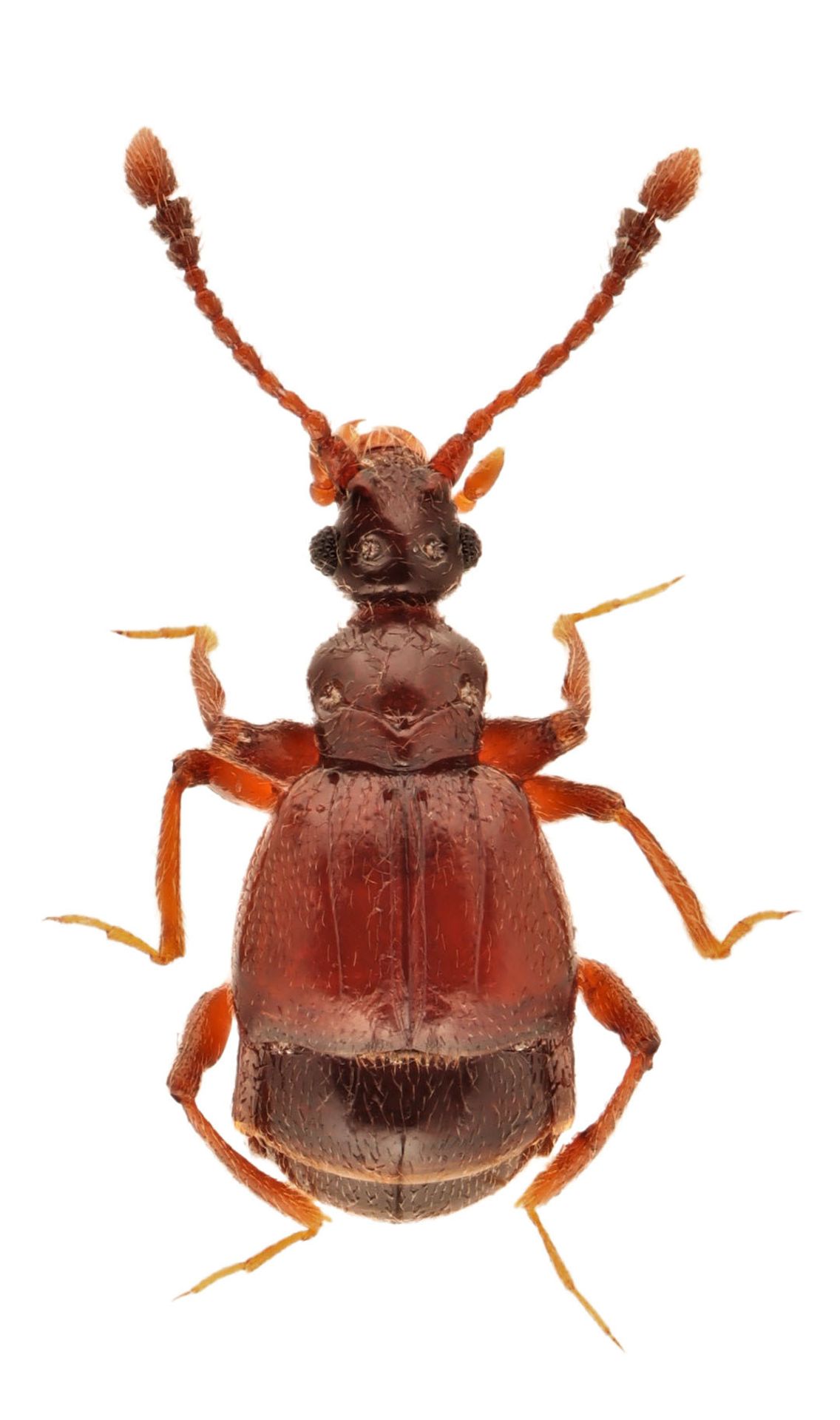
Rybaxis conjuncta is a small rove beetle in the Pselaphinae, commonly referred to as ant-loving beetles. It occurs across eastern and western North America, with records spanning from British Columbia to the Atlantic provinces of Canada and throughout the northeastern and north-central United States. The is rarely encountered, with few documented observations.
Pronunciation
How to pronounce Rybaxis conjuncta: /rɪˈbæksɪs kənˈdʒʌŋktə/
These audio files are automatically generated. While they are not always 100% accurate, they are a good starting point.
Identification
Rybaxis conjuncta is distinguished from other Rybaxis by subtle morphological features of the and genitalia, requiring microscopic examination for reliable identification. Members of the are small (approximately 1.5–2.5 mm), with compact bodies, short elytra exposing most of the , and clubbed . Separation from related Brachyglutini genera such as Brachygluta and Euplectus requires examination of the foveal pattern on the pronotum and elytra, and the structure of the male .
Images
Habitat
Found in forest floor leaf litter and decaying wood, where it inhabits the microhabitats associated with colonies. Specific microhabitat preferences within this general remain poorly documented.
Distribution
Eastern North America from Ontario, Quebec, and the Atlantic provinces (New Brunswick, Nova Scotia) south to Maryland and Virginia, west to Iowa and Wisconsin; disjunct western in British Columbia, Washington, and Idaho.
Host Associations
- Ants - associatedPselaphinae are commonly termed 'ant-loving beetles' due to frequent association with colonies, though the specific nature of this relationship for R. conjuncta is unconfirmed.
Ecological Role
Likely contributes to nutrient cycling in forest floor through or scavenging in decaying organic matter; specific ecological functions are unstudied.
Human Relevance
No known economic or medical significance. Occasionally encountered by entomologists conducting litter sampling or surveys.
Similar Taxa
- Rybaxis longicornisOverlapping eastern North American distribution; distinguished by differences in antennal length and male genitalia structure.
- Brachygluta spp.Co-occurring in similar forest floor ; Brachygluta generally have more elongate bodies and different foveal patterns on the pronotum.
More Details
Taxonomic note
The Rybaxis was historically placed in the Pselaphidae, now treated as the Pselaphinae within Staphylinidae. The was originally described by LeConte in 1849 under the genus Pselaphus.