
Rybaxis
Saulcy, 1876
ant-loving beetles
Species Guides
3- Rybaxis clavata(ant-loving beetle)
- Rybaxis conjuncta
- Rybaxis mystica
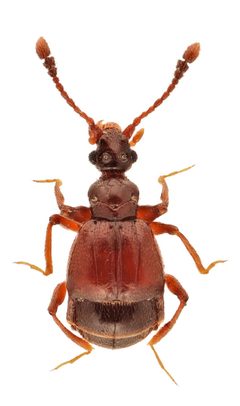
Rybaxis is a of minute rove beetles in the Pselaphinae, commonly referred to as ant-loving beetles. The genus contains at least 20 described . Members of this genus are myrmecophilous, living in association with colonies. They were first described by Saulcy in 1876.
Pronunciation
How to pronounce Rybaxis: /raɪˈbæksɪs/
These audio files are automatically generated. While they are not always 100% accurate, they are a good starting point.
Identification
As a of Pselaphinae, Rybaxis are minute beetles (typically under 3 mm) with compact bodies, short that leave most of the exposed, and distinctly clubbed . Within Brachyglutini, species-level identification requires examination of male genitalia and detailed microsculpture patterns. The genus can be distinguished from related Brachyglutini genera by subtle differences in antennal club structure and pronotal shape, though these characters require knowledge.
Images
Habitat
Found in forest floor leaf litter and soil, specifically in association with nest galleries and chambers. The myrmecophilous lifestyle restricts to areas supporting ant colonies.
Distribution
Recorded from Europe (Denmark, Norway, Sweden) and North America (Vermont, United States). The actual range likely extends more broadly across temperate regions of the Northern Hemisphere given the distribution of related , but confirmed records are sparse.
Host Associations
- Formicidae - myrmecophileLives within colonies; specific ant unknown for most
Behavior
Myrmecophilous has been documented; and larvae inhabit nests. The specific nature of the relationship with ants (whether inquilinism, commensalism, or other form) remains poorly characterized for most .
Ecological Role
As myrmecophiles, likely function as specialized inhabitants of colony microhabitats, potentially contributing to nutrient cycling within nest environments or serving as prey for ants.
Human Relevance
No direct economic or medical importance. Of interest to myrmecologists and coleopterists studying - associations.
Similar Taxa
- BrachyglutaAlso in tribe Brachyglutini; distinguished by antennal club segmentation and pronotal microsculpture
- EuplectusSimilar minute Pselaphinae with clubbed ; differs in body proportions and elytral setation patterns
More Details
Taxonomic history
The was established by Louis Félicien de Saulcy in 1876. -level remains challenging due to small size and conserved external , leading to potential undescribed diversity.
Research gaps
specificity, , and stages are poorly known. Most are known from few specimens.