
Proteinus brachypterus
(Fabricius, 1792)
Proteinus brachypterus is a small rove beetle (Staphylinidae) characterized by reduced hind wings (brachyptery), a trait reflected in its name. It is widely distributed across the Holarctic region, with confirmed records from Europe, North Africa, the Middle East, Russia, and western North America. The species inhabits various decaying organic substrates and is associated with forest floor and riparian environments. Like other members of Proteininae, it is presumed to be a or scavenger in microarthropod , though specific ecological studies are limited.
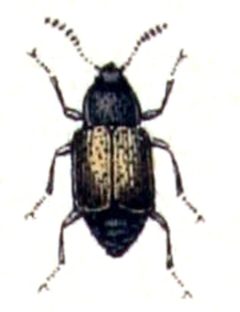
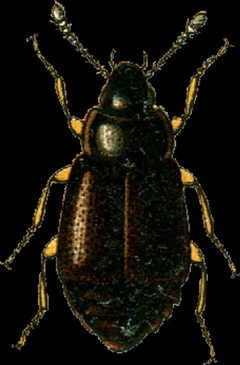
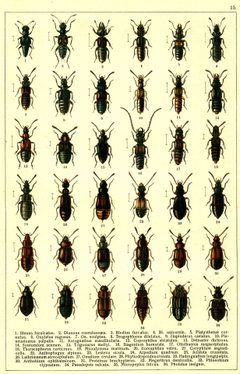
Pronunciation
How to pronounce Proteinus brachypterus: /proʊˈtiːnəs brəˈkɪptərəs/
These audio files are automatically generated. While they are not always 100% accurate, they are a good starting point.
Identification
Distinguished from fully winged Proteinus by the reduced, non-functional hind wings. May be confused with other brachypterous Proteininae; examination of genitalia or detailed comparison of elytral and abdominal proportions may be necessary for definitive identification. The combination of small size, short , and flightless condition separates it from most other small staphylinids in similar .
Images
Habitat
Found in moist, decaying organic matter including leaf litter, rotting wood, compost, and . Associated with forest floor , riparian zones, and other environments with abundant decomposing plant material. Records span temperate to zones.
Distribution
Holarctic distribution: Europe (widespread, including Poland and 30+ countries), Russia (European part, Siberia, Far East), Caucasus (Georgia, Azerbaijan, Nagorno-Karabakh), North Africa (Libya, Tunisia, Algeria, Morocco), Middle East (Turkey, Iran), Central Asia (Kazakhstan), and western North America (Canada: British Columbia; USA: Alaska). Ghana record considered erroneous.
Ecological Role
Presumed or scavenger in soil and litter microarthropod , based on -level characteristics of Proteininae. Contributes to nutrient cycling through consumption of small in decomposing organic substrates.
Human Relevance
No documented direct economic or medical significance. Occasionally encountered in compost and garden settings; of incidental interest to coleopterists.
Similar Taxa
- Proteinus species with fully developed wings (macropterous)Share and general but differ in wing condition; capable of and have longer relative to .
- Other brachypterous Staphylinidae (e.g., some Pselaphinae, Scydmaeninae)Similar reduced-wing condition and small size, but differ in body proportions, antennal structure, and often specialization; require detailed morphological examination for separation.
More Details
Nomenclature
epithet 'brachypterus' (Greek: brachys = short, pteron = wing) directly references the reduced wing condition, a diagnostic trait first noted in the original description by Fabricius in 1792.
Wing dimorphism
Brachyptery in this is fixed (not polymorphic), representing an evolutionary to stable ground-dwelling habits in forest litter environments where is unnecessary.