
Phloeocharis californica
Smetana & Campbell, 1980
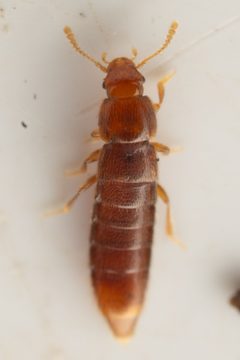
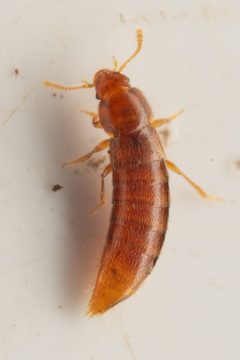
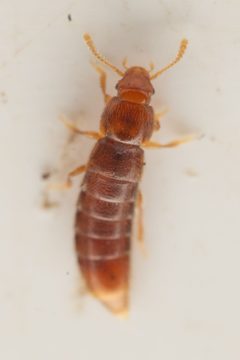
A small rove beetle to California, described in 1980 from specimens collected in the state. As a member of the Phloeocharinae, it belongs to a group of staphylinids typically associated with forest floor and decaying organic matter. The is known from very few records, reflecting either genuine rarity or limited survey effort in its habitat.
Pronunciation
How to pronounce Phloeocharis californica: /ˌflioʊˈkɛərɪs ˌkælɪˈfɔrnɪkə/
These audio files are automatically generated. While they are not always 100% accurate, they are a good starting point.
Identification
Distinguished from other Phloeocharis by its Californian distribution and subtle morphological features described in the original description. The Phloeocharis is characterized by small size, compact body form, and reduced typical of rove beetles. Specific diagnostic characters for P. californica include details of the male genitalia and body proportions as documented by Smetana and Campbell (1980).
Images
Habitat
Forest floor environments, likely associated with decaying wood, leaf litter, or other decomposing organic substrates typical for the Phloeocharinae.
Distribution
to California, USA. Documented from limited localities within the state based on museum records.
Ecological Role
Contributes to decomposition processes as part of the in forest .
Similar Taxa
- Phloeocharis subtilissimaCongeneric with overlapping morphological features; distinguished by geographic distribution and subtle structural differences in male genitalia.
- Other Phloeocharis speciesMembers of this small share compact body form and preferences; -level identification requires examination of genitalic structures and detailed morphometrics.
Sources and further reading
- BugGuide
- GBIF taxonomy match
- iNaturalist taxon
- NCBI Taxonomy
- The Big 43: The California Native Plants, Plus One, Studied in UC Davis Research | Bug Squad
- Bohart Museum: Learn about California's State Insect on UC Davis Picnic Day | Bug Squad
- A Mural Like No Other | Bug Squad
- A Flash of Orange: Welcome, California Tortoiseshell! | Bug Squad
- California Dogface Butterfly: What the Fire Did | Bug Squad
- Bembicid Holdings | Entomology Research Museum