
Phloeocharinae
Erichson, 1839
Genus Guides
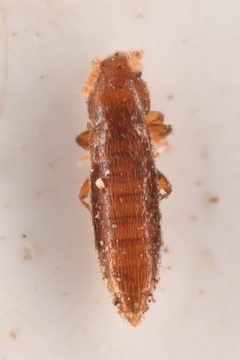
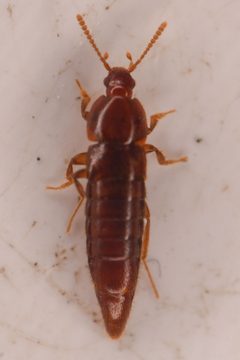
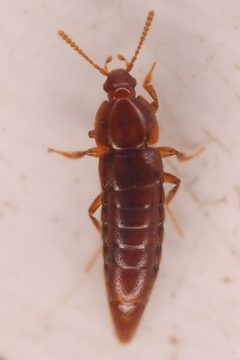
4Phloeocharinae is a of rove beetles (Staphylinidae) characterized by distinctive abdominal tergal combs and procoxal . The group contains five and six in North America, with the genus Phloeocharis dominating the European fauna. Members are primarily saproxylic, inhabiting damp forest environments under bark and in leaf litter. The of most species remains poorly known.
Pronunciation
How to pronounce Phloeocharinae: /ˌfliːəˈkærɪniː/
These audio files are automatically generated. While they are not always 100% accurate, they are a good starting point.
Identification
Procoxae lack a mesal groove. Abdominal tergites IV and V each bear a pair of distinctive cuticular combs. Hypopharynx is distinctive. are 5-5-5 segmented.
Images
Habitat
Generally found in damp places, including leaf litter and under bark. Saproxylic in forests, specifically associated with dead wood and tree bark microhabitats.
Distribution
North America: five and six . Europe: genus Phloeocharis with 12 species, mostly Mediterranean; Phloeocharis subtilissima widespread throughout Europe. Phloeocharis subtilissima introduced to North America (Halifax, Nova Scotia, Canada) via port city.
Ecological Role
Saproxylic; associated with decaying wood and bark . Forms part of the secondary forest pest under tree bark.
Human Relevance
Phloeocharis subtilissima documented as introduction to North America via international shipping through port of Halifax, Nova Scotia. Serves as case study for port-mediated introduction of Coleoptera.
Similar Taxa
- OlisthaerinaeRelated of Staphylinidae historically treated alongside Phloeocharinae in taxonomic revisions; distinguished by different morphological characters and ecological preferences.
Sources and further reading
- BugGuide
- Wikipedia
- iNaturalist taxon
- NCBI Taxonomy
- Catalogue of Life
- THE GENERA OF THE SUBFAMILIES PHLOEOCHARINAE AND OLISTHAERINAE OF AMERICA NORTH OF MEXICO WITH DESCRIPTION OF A NEW GENUS AND NEW SPECIES FROM WASHINGTON (COLEOPTERA: STAPHYLINIDAE)
- Phloeocharis subtilissima Mannerheim (Staphylinidae: Phloeocharinae) and Cephennium gallicum Ganglbauer (Scydmaenidae) new to North America: a case study in the introduction of exotic Coleoptera to the port of Halifax, with new records of other species