
Bledius gallicus
(Gravenhorst, 1806)
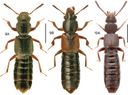
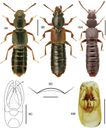
Bledius gallicus is a rove beetle in the Staphylinidae, first described by Gravenhorst in 1806 under the name Oxytelus gallicum. The has a broad native distribution across Europe, Russia, the Caucasus, Middle East, Central Asia, Mongolia, and China. It has been introduced to eastern North America, with established in Canada and the northeastern United States. The Bledius comprises species often associated with sandy or muddy , though specific ecological details for B. gallicus remain limited in published sources.
Pronunciation
How to pronounce Bledius gallicus: //ˈbliːdi.ʊs ˈɡæl.lɪ.kus//
These audio files are automatically generated. While they are not always 100% accurate, they are a good starting point.
Images
Distribution
Native range includes Europe, European Russia, Siberia, Russian Far East, Armenia, Algeria, Tunisia, Israel, Lebanon, Syria, Kazakhstan, Turkmenistan, Mongolia, and China. Introduced to North America: Canada (New Brunswick, Newfoundland and Labrador, Nova Scotia, Ontario, Prince Edward Island, Quebec) and USA (Massachusetts, Maryland, Maine, Michigan, New Hampshire, New Jersey, New York, Ohio, Pennsylvania, Rhode Island, Wisconsin).
More Details
Taxonomic history
Originally described as Oxytelus gallicum by Gravenhorst in 1806, later transferred to the Bledius. The epithet 'gallicus' refers to Gaul (ancient France), likely indicating the type locality.
Introduced populations
Established in eastern North America suggest human-mediated introduction, possibly through shipping or ballast. The appears to have been present in the region since at least the early 20th century based on collection records.