
Artochia
Casey, 1893
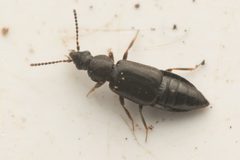
Artochia is a of rove beetles (Staphylinidae) in the Omaliinae, tribe Anthophagini. The genus contains two described : Artochia californica (California) and Artochia productifrons (distributed across British Columbia, Alaska, California, Oregon, Utah, and Washington). It is a small, rarely encountered genus with limited documented observations.
Pronunciation
How to pronounce Artochia: //ɑrˈtoʊkiə//
These audio files are automatically generated. While they are not always 100% accurate, they are a good starting point.
Identification
Artochia can be distinguished from other Omaliinae by characteristics of the tribe Anthophagini, though specific diagnostic features for the genus itself are not well documented in accessible literature. The two differ in geographic distribution and subtle morphological traits related to structure (A. productifrons having a more produced frons as indicated by its species epithet).
Images
Habitat
Based on the distribution of its constituent , Artochia occurs in western North American ranging from coastal regions to montane areas. Artochia californica is restricted to California, while A. productifrons spans a broader range including Pacific coastal forests and interior western montane environments.
Distribution
Western North America. Artochia californica: California. Artochia productifrons: British Columbia, Alaska, California, Oregon, Utah, and Washington.
Similar Taxa
- Other Anthophagini genera (e.g., Eusphalerum, Anthophagus)Share Omaliinae and tribe Anthophagini; Artochia is distinguished by -specific morphological characters, though these require detailed examination.
- Other Omaliinae genera outside AnthophaginiDiffer in tribal affiliation; Artochia belongs to Anthophagini based on tarsal and genitalic characters typical of that tribe.
More Details
Species composition
The contains only two described , making it one of the smaller genera in Omaliinae. Both species were described in the late 19th and early 20th centuries (1893 and 1912), with no additional species described since.
Observation rarity
As of the source data, iNaturalist records only 4 observations for the entire , indicating it is rarely encountered or underreported by naturalists.