
Mycetoporus
Mannerheim, 1830
Species Guides
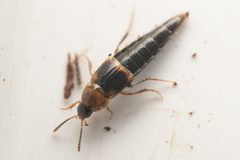
2Mycetoporus is a of rove beetles ( Staphylinidae) containing at least 70 described . Members are characterized by their crab-like posture and movement. The genus was established by Mannerheim in 1830 and is classified within the Mycetoporinae. Species in this genus are primarily found in northern Europe, with confirmed records from Denmark, Norway, and Sweden.
Pronunciation
How to pronounce Mycetoporus: //ˌmaɪsɪˈtɒpərəs//
These audio files are automatically generated. While they are not always 100% accurate, they are a good starting point.
Identification
The is distinguished by a crab-like body posture with legs positioned for lateral movement. As rove beetles, members have shortened that leave most of the exposed. Specific identification of within Mycetoporus requires examination of subtle morphological characters; the genus-level relies on the combination of Mycetoporinae characteristics and the distinctive crab-like stance.
Images
Distribution
Confirmed records from Denmark, Norway, and Sweden. The appears to have a primarily northern European distribution, though the full range of all is not comprehensively documented.
Behavior
The crab-like posture suggests lateral movement capability, though specific behavioral observations for the are not well documented in available sources.
More Details
Taxonomic history
The was established by Mannerheim in 1830 and is the type genus of the Mycetoporinae. The subfamily placement reflects morphological affinities with other fungus-associated rove beetles, though the specific ecological relationships for most Mycetoporus remain unstudied.
Species diversity
At least 70 have been described, with Catalogue of Life listing 78 accepted species. The high species count relative to limited ecological data suggests many species may be morphologically defined with unresolved natural history information.