
Mycetoporinae
Thomson, C. G., 1859
Genus Guides
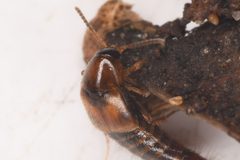
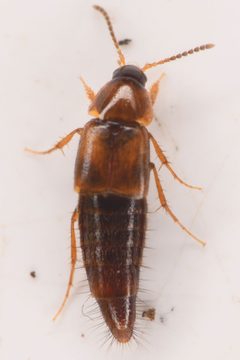
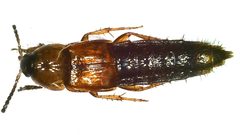
10Mycetoporinae is a of rove beetles (Staphylinidae) characterized by a medium-to-large sublimuloid body form, elongated with a visible ridge beneath the , and scutellum with a medially divided basal carina. The subfamily has been documented from the Upper Cretaceous to the present, with fossil evidence from lacustrine deposits in Botswana confirming morphological stasis spanning approximately 90 million years. Members exhibit phytophagous or mycophagous feeding habits.
Pronunciation
How to pronounce Mycetoporinae: /maɪˌsɛtəˈpɔːraɪniː/
These audio files are automatically generated. While they are not always 100% accurate, they are a good starting point.
Identification
Mycetoporinae can be distinguished from other Staphylinidae by the combination of: sublimuloid (somewhat boat-shaped) body form; elongated with a visible ridge on the side beneath the ; antennomeres that increase in length and width toward the apex; scutellum bearing a basal carina that is distinctly divided medially; elevated area along the elytral ; and presumably large metacoxae with tapering . The fossil Cretafrica differs from extant members in having a triangular head and with broadly rounded apico-lateral margins.
Images
Distribution
Extant members occur across multiple continents with documented fossil presence in Upper Cretaceous lacustrine deposits at Orapa Diamond Mine, Botswana. The fossil occurrence indicates widespread distribution during the mid-Cretaceous.
Diet
Phytophagous or mycophagous; has been observed feeding on fresh and rotting mushrooms.