
Micropeplinae
Leach, 1815
Genus Guides
3Micropeplinae is a small of rove beetles (Staphylinidae) characterized by 9-segmented with single-segmented clubs and a tarsal formula of 4-4-4 (appearing as 3-3-3). The group comprises approximately six extant worldwide, including Micropeplus, Kalissus, Cerapeplus, Peplomicrus, and Arrhenopeplus, plus the extinct †Protopeplus from Burmese amber. are primarily associated with moist microhabitats and feed on mold spores and fungal .
Pronunciation
How to pronounce Micropeplinae: /ˌmaɪkroʊˈpɛplɪniː/
These audio files are automatically generated. While they are not always 100% accurate, they are a good starting point.
Identification
Distinguished from other Staphylinidae by the combination of 9-segmented with single-segmented clubs and the 4-4-4 tarsal formula (appearing 3-3-3). The small, hidden first tarsomere is a key diagnostic character. Within the , are distinguished by body form and male genitalia structure; identification often requires examination of .
Images
Appearance
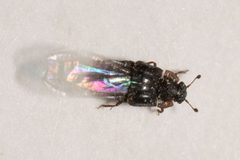
Small rove beetles with compact bodies. possess 9 segments with single-segmented clubs. Tarsal formula is 4-4-4, though this appears as 3-3-3 due to the small size of the first tarsomere. The reduced tarsomere is a distinctive structural feature of the .
Habitat
Moist forest floor leaf litter, lake shore margins, marshy areas, and accumulations of plant debris. Also recorded from decomposing hay, decaying sawdust, and wildlife feeder debris. Some occur in mammal and bird nests.
Distribution
Widespread but patchily distributed across the Holarctic region. In North America, recorded from British Columbia, Washington, and Mexico. In Europe, documented across Poland including Białowieża Primeval Forest, Sudetes Mountains, Bieszczady Mountains, and multiple lowland regions. The Cerapeplus extends to the Eastern Himalaya (Xizang, China).
Diet
Mould spores and . Some sources suggest saprophagy, though direct evidence is limited.
Behavior
Some have been collected using car-netting methods on roads and attracted to traps for bark beetles (Trypodendron spp.). has been documented in several species.
Ecological Role
Associated with decomposition processes in forest litter and plant debris. Functions as a mycophagous component of the soil and litter fauna.
Similar Taxa
- other Staphylinidae subfamiliesMicropeplinae differ from most rove beetles in having 9-segmented rather than 10- or 11-segmented , and in the distinctive 4-4-4 tarsal formula with reduced first tarsomere.
More Details
Taxonomic note
The extinct †Protopeplus is known from Burmese amber (Myanmar, Cenomanian), indicating the 's ancient origin.
Rarity
Several are exceptionally rare with small, scattered ; M. fulvus and M. porcatus are among the more widespread species in Europe.
Sources and further reading
- BugGuide
- Wikipedia
- iNaturalist taxon
- NCBI Taxonomy
- Catalogue of Life
- Faunistic review of Polish Micropeplinae (Coleoptera: Staphylinidae)
- NEW SPECIES AND RECORDS OF NEW WORLD MICROPEPLINAE (COLEOPTERA: STAPHYLINIDAE)
- A record of Cerapeplus Löbl & Burckhardt, 1988 (Coleoptera: Staphylinidae: Micropeplinae) in the Eastern Himalaya