
Fenderia
Hatch, 1957
Species Guides
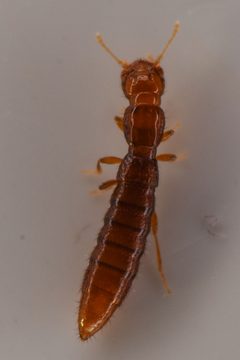
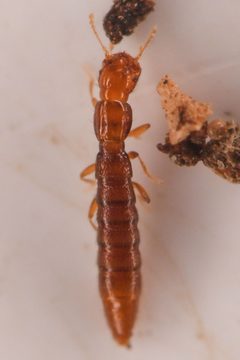
2Fenderia is a of small rove beetles (Staphylinidae) in the Euaesthetinae, tribe Stictocraniini. The genus was established by Hatch in 1957 and is native to western North America. Members of this genus are among the smallest staphylinids, with reduced wing venation and characteristic modifications of the and mouthparts associated with their specialized lifestyle.
Pronunciation
How to pronounce Fenderia: /fɛnˈdɛriə/
These audio files are automatically generated. While they are not always 100% accurate, they are a good starting point.
Identification
Fenderia are distinguished from other Euaesthetinae by their minute size (usually under 2 mm), compact body form, and the structure of the capsule which is often narrowed posteriorly. The is placed in tribe Stictocraniini based on characters of the mouthparts and . Species-level identification requires examination of male genitalia and fine details of the elytral punctuation.
Images
Habitat
Fenderia have been collected from forested environments, particularly in association with decaying wood and leaf litter. They appear to favor moist microhabitats in coniferous and mixed forests.
Distribution
Western North America, with records from the Pacific Northwest region of the United States and adjacent areas of Canada.
Ecological Role
As members of the Euaesthetinae, Fenderia likely function as or scavengers in forest floor , though specific ecological roles have not been documented.
Human Relevance
No known economic or medical importance. The is of interest primarily to in staphylinid .
Similar Taxa
- StictocraniusShares tribe Stictocraniini and similar small size, but Stictocranius has a more elongate body form and different structure.
- EuaesthetusAlso in Euaesthetinae but in tribe Euaesthetini; Euaesthetus generally have more developed and different wing venation.
More Details
Taxonomic history
The was described by Melville Hatch based on material from the Pacific Northwest. The placement in Stictocraniini reflects a broader reclassification of the Euaesthetinae based on larval and .
Collection challenges
The extremely small size of Fenderia makes them easy to overlook in standard collecting. Specialized techniques such as sifting of fine organic material and use of are typically required for successful collection.