
Euaesthetini
Thomson, C. G., 1859
Genus Guides
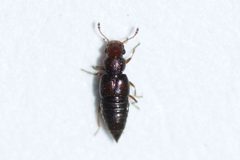
2Euaesthetini is a tribe of rove beetles (Staphylinidae) within the Euaesthetinae, established by Thomson in 1859. Members are small, often minute beetles characterized by distinctive antennal and mouthpart structures. The tribe is distinguished from the related Stenina by specific morphological features of the and . Euaesthetini contains multiple distributed across various biogeographic regions.
Pronunciation
How to pronounce Euaesthetini: /juːˌæsˈθɛtɪnaɪ/
These audio files are automatically generated. While they are not always 100% accurate, they are a good starting point.
Identification
Euaesthetini can be distinguished from the closely related tribe Stenina by the presence of a distinct basal ridge on the and the structure of the antennal insertions, which are concealed from above by lateral extensions of the . Members lack the prominent neck-like constriction between and pronotum seen in many other staphylinid groups. The maxillary palps are relatively short and the ligula is reduced. Body size is generally small, with most under 5 mm in length.
Images
Distribution
Euaesthetini has a broad distribution with records from the Palearctic, Nearctic, Neotropical, Oriental, and Australian regions. Individual show more restricted ranges; for example, Euaesthetus is primarily Holarctic, while other genera such as Edaphus are more diverse in tropical and subtropical regions.
Similar Taxa
- SteninaStenina is the other tribe within Euaesthetinae and shares the general body plan of small rove beetles with reduced . Euaesthetini differs in mandibular structure, antennal insertion concealment, and details of the mouthparts; Stenina generally have more exposed antennal insertions and lack the mandibular ridge.
More Details
Taxonomic History
Thomson originally established Euaesthetini in 1859, and the tribal classification within Euaesthetinae has remained relatively stable, with only two tribes (Euaesthetini and Stenina) currently recognized. The internal and generic limits within Euaesthetini have undergone revision based on morphological and molecular data.
Morphological Synapomorphies
Euaesthetini is supported by several derived characters including: antennal insertions located in deep grooves and concealed from view by lateral frontal ridges; presence of a ventrobasal ridge or on the ; reduced ligula; and specific modifications of the mesoventrite.