
Stictocraniini
Jakobson, 1914
Genus Guides
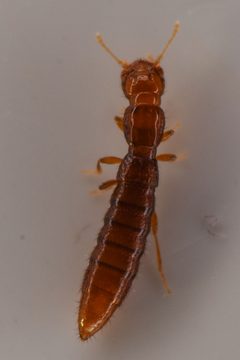
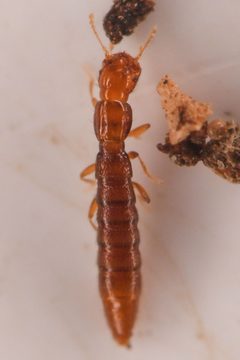
2Stictocraniini is a tribe of rove beetles (Staphylinidae) within the Euaesthetinae, established by Jakobson in 1914. Members of this tribe are characterized by distinctive cranial and antennal modifications. The tribe is relatively small and poorly studied compared to other Euaesthetinae tribes. are primarily distributed across the Holarctic region.
Pronunciation
How to pronounce Stictocraniini: /ˌstɪktoʊˈkreɪniˌaɪni/
These audio files are automatically generated. While they are not always 100% accurate, they are a good starting point.
Identification
Stictocraniini can be distinguished from other Euaesthetinae tribes by the presence of a distinct, often expanded or modified (frontal region of the ), with the Stictocranius showing particularly pronounced cranial structures. The antennal insertions are typically positioned more ventrally than in related tribes. The pronotum lacks the deep lateral grooves seen in some other Euaesthetinae. These beetles are generally small (2–4 mm), with compact bodies and relatively short that expose most of the .
Images
Habitat
within Stictocraniini have been collected from forest floor litter, particularly in coniferous and mixed woodlands. They occur in moist, decaying organic matter including rotting wood, leaf litter, and moss. Some records indicate association with fungal fruiting bodies. Specific microhabitat preferences vary by and remain incompletely documented.
Distribution
The tribe has a primarily Holarctic distribution, with records from northern and central Europe, Russia, Japan, and North America. The Stictocranius is known from the Palearctic, while other genera extend the range into the Nearctic. Distribution data are sparse for many , reflecting limited collecting effort rather than true rarity in some regions.
Seasonality
have been collected year-round in temperate regions, with peak activity during spring and autumn. Larval stages are poorly known and their seasonal occurrence has not been established.
Behavior
Members of Stictocraniini are slow-moving beetles that remain concealed within their substrate. When disturbed, they may curl the in a defensive posture typical of many Staphylinidae. No specialized have been documented.
Ecological Role
As members of the forest floor , these beetles contribute to decomposition processes. Their specific ecological functions have not been studied, but they likely prey on small and fungal spores within decaying organic matter.
Human Relevance
No direct economic or medical significance. The tribe has no known pest or beneficial status in agriculture or forestry. Specimens are occasionally collected in ecological surveys and biodiversity assessments.
Similar Taxa
- EuaesthetiniAlso within Euaesthetinae, but differs in having antennal insertions positioned more dorsally and lacking the pronounced fronal modifications characteristic of Stictocraniini.
- Edaphus (genus in Euaesthetini)Similar small size and compact form, but Edaphus has a more elongate body and lacks the distinctive cranial structure of Stictocraniini.
More Details
Taxonomic History
The tribe was established by Jakobson in 1914 based on the Stictocranius. The concept has remained relatively stable, though the number of included genera has been revised. Recent phylogenetic studies of Euaesthetinae support the monophyly of Stictocraniini, though relationships within the tribe require further investigation.
Included Genera
The tribe includes the Stictocranius (Palearctic), and possibly other small genera whose placement has been debated. The exact generic composition varies among classifications, reflecting ongoing taxonomic revision of the .