
Philotermes
Kraatz, 1857
Species Guides
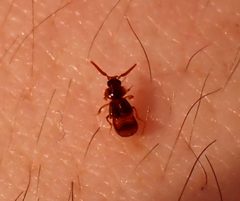
1Philotermes is a of rove beetles ( Staphylinidae) containing seven described . The genus belongs to the tribe Philotermitini within the Aleocharinae. Species were described between 1857 and 1957, with most described by Kraatz in 1857 and Seevers in 1938 and 1957. The genus is taxonomically accepted and placed within the rove beetle lineage Staphylinoidea.
Pronunciation
How to pronounce Philotermes: //ˌfaɪloʊˈtɜrmiːz//
These audio files are automatically generated. While they are not always 100% accurate, they are a good starting point.
Identification
Members of Philotermes can be recognized by their placement in the tribe Philotermitini, which is characterized by morphological adaptations associated with relationships. The can be distinguished from other Philotermitini genera by specific combinations of antennal, pronotal, and abdominal characters described in the original . Species-level identification requires examination of male genitalia and other fine structural details.
Images
Distribution
occur in North America (Philotermes pennsylvanicus, P. emersoni, P. cubitopilis, P. werneri) and the Old World tropics (P. fuchsii, P. laxicornis, P. pilosus). The North American species are documented from the eastern United States, with P. pennsylvanicus indicating a Pennsylvania type locality.
Host Associations
- Termitidae - belongs to tribe Philotermitini, which is specialized for life within colonies. Specific termite genera for individual Philotermes are not documented in available sources.
Similar Taxa
- Other Philotermitini generaShare -associated and general Aleocharinae body plan; distinguished by antennal structure, pronotal shape, and male genitalia .
- Other Aleocharinae inquilinesSimilar small size and myrmecophilous or termitophilous habits; Philotermes specifically associated with rather than ants.
More Details
Taxonomic history
The was established by Kraatz in 1857 with the description of three (P. fuchsii, P. pennsylvanicus, P. pilosus). Seevers added three North American species in 1938 and 1957, and Sharp described P. laxicornis from Central America in 1883.
Observational rarity
Only 12 observations recorded on iNaturalist as of source date, reflecting the cryptic lifestyle of termitophilous beetles and difficulty of detection within colonies.