
Philotermes pilosus
Kraatz, 1857
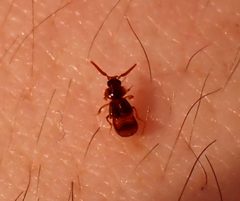
Philotermes pilosus is a of rove beetle in the Staphylinidae, first described by Kraatz in 1857. It is a member of the tribe Philotermitini, a group associated with colonies. The species is recorded from eastern and central North America, with distribution records from multiple states including Illinois, Indiana, Massachusetts, New York, Tennessee, and Ohio. As with other members of its tribe, it is presumed to be a , though specific ecological details remain poorly documented.
Pronunciation
How to pronounce Philotermes pilosus: /ˌfaɪloʊˈtɜːrmiːz paɪˈloʊsəs/
These audio files are automatically generated. While they are not always 100% accurate, they are a good starting point.
Identification
Members of the Philotermes can be distinguished from other aleocharine rove beetles by their association with colonies and corresponding morphological adaptations. P. pilosus specifically is characterized by its pilose (hairy) , as indicated by its specific epithet. Detailed diagnostic features separating it from are not readily available in accessible literature. The tribe Philotermitini as a whole is distinguished by termitophilous habits and associated morphological modifications.
Images
Distribution
Recorded from the United States: District of Columbia, Illinois, Indiana, Massachusetts, New York, Tennessee, and Ohio. The has a broad eastern and central North American distribution.
Host Associations
- Isoptera - colony associateAs a member of tribe Philotermitini, presumed to be termitophilous; specific not documented
Similar Taxa
- Other Philotermes species share tribe-level characteristics of termitophily and general body form; specific distinguishing features for P. pilosus not well documented in accessible sources
- Other Philotermitini generaShare -associated and corresponding morphological adaptations; generic distinctions require specialized taxonomic knowledge