
Hoplandria
Kraatz, 1857
Species Guides
1Hoplandria is a of rove beetles ( Staphylinidae, Aleocharinae) established by Kraatz in 1857. The Nearctic fauna comprises 12 recognized arranged in four subgenera: Hoplandria, Genosema, Lophomucter, and Arrhenandria. The genus is taxonomically well-characterized through revisionary work, though biological and ecological data remain limited.
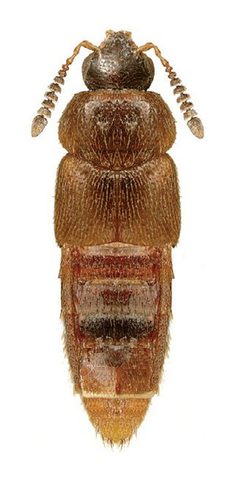
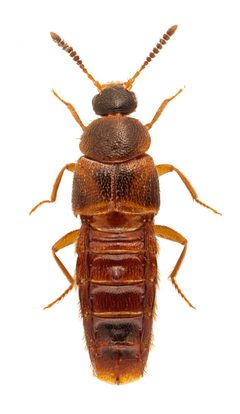

Pronunciation
How to pronounce Hoplandria: /hoʊˈplændriə/
These audio files are automatically generated. While they are not always 100% accurate, they are a good starting point.
Identification
Diagnostic characteristics include subgeneric divisions based on structural of the mouthparts, , and genitalia. -level identification requires examination of detailed characters illustrated in revisionary treatments, including line drawings and scanning electron microscopy of fine structural features. Keys to subgenera and species are available for the Nearctic fauna.
Images
Distribution
Nearctic region (America north of Mexico); additional records from South America (Colombia: Macarena Norte, Parque Nacional Natural Serranía de Chiribiquete).
Similar Taxa
- PlatandriaHoplandria brittoni was previously misidentified and synonymized with Platandria carolinae, indicating historical confusion between these aleocharine requiring careful examination of genitalic and external characters.
More Details
Taxonomic history
The has undergone significant taxonomic revision, with two subgenera (Genosema and Lophomucter) previously treated as separate genera. The subgenus Arrhenandria was newly described in the 1989 revision.
Species diversity
Approximately 13 are recognized globally; the Nearctic revision treated 12 species, with eight described as new in 1989: H. alternans, H. isabellae, H. kisatchie, H. klimaszewskii, H. oconee, H. okaloosa, H. sanbornei, and H. smetanai.