
Bolitocharina
Thomson, C. G., 1859
Genus Guides
4Bolitocharina is a subtribe of rove beetles (Staphylinidae) within the tribe Homalotini, Aleocharinae. It was established by Carl Gustaf Thomson in 1859. The subtribe contains multiple of small to minute beetles characterized by compact body forms and reduced typical of the . Members are found primarily in the Holarctic region, with some representation in other biogeographic zones.
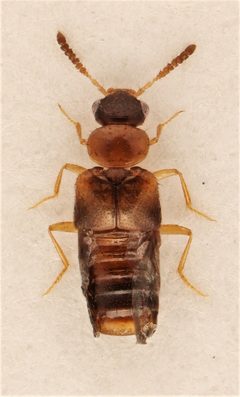
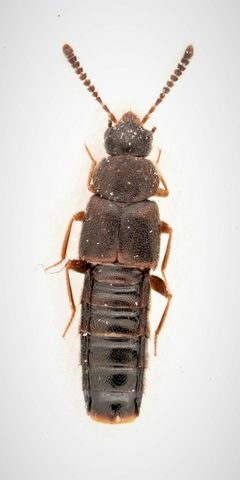
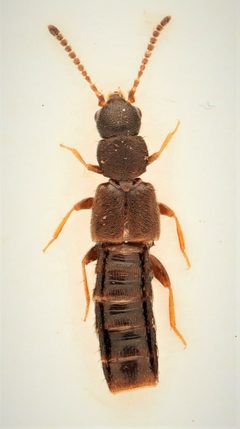
Pronunciation
How to pronounce Bolitocharina: //boʊ.lɪ.təˈkæraɪnə//
These audio files are automatically generated. While they are not always 100% accurate, they are a good starting point.
Identification
Members of Bolitocharina can be distinguished from other Homalotini subtribes by the combination of: compact, somewhat flattened body form; with 11 segments and a distinct club; mesoventrite with specific structural configurations (mesoventral process); and characteristic arrangements of tarsal segments. Detailed identification requires examination of mouthpart structure, genitalia, and precise configurations of the mesoventral and metaventral processes. These features separate Bolitocharina from the closely related Gyrophaenina and other subtribes within Homalotini.
Images
Habitat
within Bolitocharina occupy moist microhabitats in forested and riparian environments. They are frequently associated with decaying organic matter, including rotting wood, leaf litter, compost, and fungal fruiting bodies. Some show specific associations with particular fungal substrates or with the galleries of wood-boring insects. The subtribe shows preference for humid, shaded conditions with abundant decomposing plant material.
Distribution
The subtribe has a predominantly Holarctic distribution, with highest diversity in the Palaearctic region (Europe, northern Asia). Records extend across North America, with scattered representation in other regions including parts of the Oriental and Neotropical zones. Distribution patterns reflect the historical of temperate forest .
Seasonality
Activity patterns vary by and latitude. In temperate regions, are most commonly encountered from spring through autumn, with peak abundance during summer months when fungal fruiting is abundant. Some species overwinter as adults in protected microhabitats. In tropical and subtropical regions, activity may extend throughout the year with peaks corresponding to wet seasons.
Behavior
Members of this subtribe exhibit characteristic rapid, darting movements typical of small aleocharine rove beetles. They are agile climbers on fungal and decaying wood substrates. When disturbed, they frequently fold their appendages and remain motionless, or seek immediate in crevices. Some demonstrate phoretic , utilizing wood-boring beetles or other insects for between ephemeral fungal .
Ecological Role
Bolitocharina function as decomposers and fungivores within forest floor and dead wood . Their feeding activities on fungal mycelia and spores contribute to nutrient cycling in decaying organic matter. They occupy a middle position in the saprophytic , consuming fungal while serving as prey for larger predatory arthropods. Their presence indicates mature, undisturbed decomposition with established fungal communities.
Human Relevance
No direct economic importance to humans. The subtribe has potential value as bioindicators of forest health and continuity, given their dependence on stable, undisturbed decay processes and fungal . Some have been documented in environments such as compost heaps and garden mulch, though they are not considered pests.
Similar Taxa
- GyrophaeninaAnother subtribe within Homalotini sharing compact body forms and fungal associations. Distinguished by differences in mesoventral process structure, tarsal formula, and detailed configurations of the mouthparts and genitalia.
- HomalotinaThe nominotypical subtribe of Homalotini. Members generally have more elongate body forms and different arrangements of the abdominal tergites and sternites; precise separation requires examination of structural features of the prothorax and mesoventrite.
More Details
Taxonomic History
The subtribe has undergone repeated revision, with boundaries and included shifting as aleocharine classification has been refined. Modern phylogenetic studies using molecular and morphological data have clarified its position within Homalotini, though some generic placements remain under investigation. The type genus is Bolitochara.
Research Significance
Bolitocharina represents a model group for studying the evolution of mycophagy in rove beetles and the ecological diversification associated with fungal resource specialization. The subtribe's relatively well-documented compared to other aleocharine groups makes it useful for biogeographic and studies.