
Myrmecocephalus
MacLeay, 1871
Species Guides
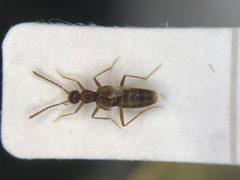
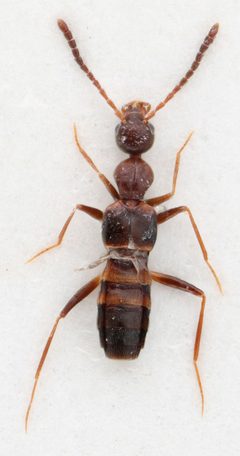
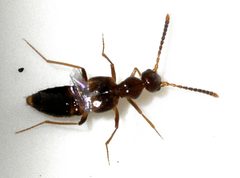
3Myrmecocephalus is a of rove beetles (Staphylinidae) in the tribe Falagriini. The genus contains approximately 115 recognized as of 2026 and has a nearly distribution. Members of this genus are small beetles associated with colonies, reflecting their myrmecophilous lifestyle implied by the genus name.
Pronunciation
How to pronounce Myrmecocephalus: /mɪərməˈkɛfələs/
These audio files are automatically generated. While they are not always 100% accurate, they are a good starting point.
Identification
Myrmecocephalus are small rove beetles that can be distinguished from related by their association with nests and morphological features typical of the Falagriini tribe. The genus name, derived from Greek roots meaning 'ant ,' may allude to physical adaptations for myrmecophily. Definitive identification to species level requires examination of microscopic characters including genitalia and detailed body proportions.
Images
Habitat
in this are found in association with colonies, indicating a myrmecophilous lifestyle. They occupy nests of ants, though specific nest architecture and environmental conditions vary by species and host association.
Distribution
Nearly . Distribution records include Denmark, Norway, and Sweden. The occurs across multiple continents, reflecting its success in diverse -associated .
Host Associations
- Ants - myrmecophile is myrmecophilous; inhabit nests. Specific ant genera or species are not documented in available sources.
Behavior
Myrmecophilous is characteristic of the . have been observed living within colonies, though the specific behavioral mechanisms enabling colony integration remain undocumented in available sources.
Ecological Role
Myrmecocephalus function as myrmecophiles within colony . Their presence in ant nests suggests they exploit resources or protection provided by colonies, though specific ecological impacts on host ants are not documented.
Similar Taxa
- Other Falagriini generaShared tribal characteristics including small size and aleocharine body plan. Myrmecocephalus is distinguished by its specific -associated and presumably by fine morphological details of mouthparts and body structure adapted for myrmecophily.
More Details
Etymology
The name combines Greek 'myrmex' () and 'kephale' (), referring to the ant-associated lifestyle or possibly to morphological resemblance.
Taxonomic history
Established by W.J. MacLeay in 1871. The has undergone significant expansion, now comprising 115 as of early 2026.