
Thanatophilus trituberculatus
(Kirby, 1837)
Cold-shore Carrion Beetle
Thanatophilus trituberculatus is a carrion beetle in the Silphidae. The occurs across northern regions of both North America and Eurasia. It is associated with cold environments, as indicated by its "Cold-shore Carrion Beetle" and its distribution in subarctic and zones. Like other members of its , it likely feeds on decomposing animal matter.
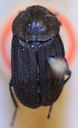
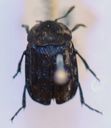
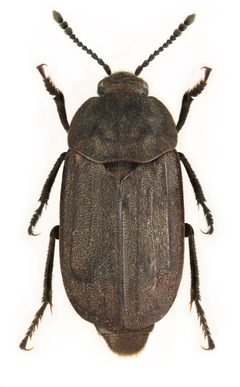
Pronunciation
How to pronounce Thanatophilus trituberculatus: /θænəˈtɒfɪləs traɪtjuːbərˈkjuːlətəs/
These audio files are automatically generated. While they are not always 100% accurate, they are a good starting point.
Images
Habitat
Cold-shore environments; associated with subarctic and regions. Specific microhabitat details are not well documented, but are found on carrion and decomposing animal remains.
Distribution
Holarctic distribution: North America (Canada: Alberta, Manitoba, Northwest Territories, Ontario, Saskatchewan; USA: Alaska), Europe (Finland, northern Russia including Siberia and Far East), and Asia (Mongolia).
Diet
Carrion; decomposing animal matter. Specific dietary details for this are inferred from -level traits and .
Ecological Role
Decomposer; contributes to nutrient cycling through consumption of carrion. Specific ecological studies for this are not documented.
Similar Taxa
- Thanatophilus lapponicusAlso a Holarctic carrion beetle in the same , sharing similar preferences and distribution; distinguished by morphological details not specified in available sources.
More Details
Taxonomic Note
GBIF and iNaturalist list the as Staphylinidae, but this appears to be a database error; authoritative sources (NCBI, Catalogue of Life) correctly place this in Silphidae. The specific epithet 'trituberculatus' refers to three , likely describing a pronotal or elytral feature.
Observation Rarity
iNaturalist records only 5 observations, suggesting this is either genuinely rare, under-collected, or restricted to remote northern with limited human observation.