
Oiceoptoma inaequale
(Fabricius, 1781)
Ridged Carrion Beetle
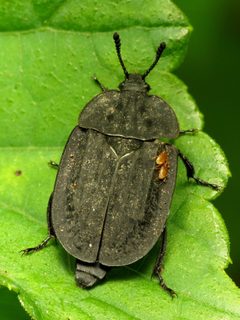
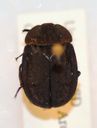
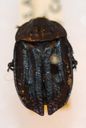
Oiceoptoma inaequale, commonly known as the ridged carrion beetle, is a North American of carrion beetle in the Silphidae. It is one of several Oiceoptoma species that specialize in consuming decaying animal matter. The species has been documented breeding on snake carcasses and participates in carcass-based alongside blow flies and other necrophagous insects. Like related species, it likely contributes to nutrient cycling through the decomposition of vertebrate remains.
Pronunciation
How to pronounce Oiceoptoma inaequale: /ˌɔɪsiˈɒptəmə ˌɪniˈeɪkwəli/
These audio files are automatically generated. While they are not always 100% accurate, they are a good starting point.
Images
Distribution
Canada (Ontario, Quebec) and the United States (Alabama, Arkansas, Colorado, Connecticut, Florida, Georgia, Illinois, Indiana, Kansas, Kentucky, Louisiana, Massachusetts, Maryland, Michigan, Minnesota, Missouri, North Dakota, New Jersey, New York, Ohio, Oklahoma, Pennsylvania, Rhode Island, South Dakota, Tennessee, Texas, Wisconsin).
Diet
and larvae consume decaying vertebrate flesh. Adults have been observed feeding on carcass flesh and on maggots of flesh-eating flies. Larvae consume protein-rich flesh and internal organs of carcasses.
Life Cycle
are deposited in soil near carcasses. Larvae hatch and feed on carrion, molting several times before moving to soil to pupate. emerge from soil and await new carcass resources.
Behavior
arrive at carcasses after initial by blow flies. Both adults and larvae feed on carrion and associated fly maggots. Adults may breed on suitable carcass substrates.
Ecological Role
Participates in carrion decomposition and nutrient recycling. Consumes fly maggots, potentially regulating of other necrophagous insects. Transfers nutrients from dead animals into soil through larval development and .
Human Relevance
May have forensic applications due to predictable patterns of affinity, seasonal appearance, and geographic distribution. in the Oiceoptoma have been used by crime scene investigators to estimate time of death.
Similar Taxa
- Oiceoptoma noveboracenseBoth are North American Oiceoptoma carrion beetles with overlapping ranges and similar ecological roles. O. noveboracense (margined carrion beetle) is distinguished by marginal features of the not described for O. inaequale in available sources.
- Necrophila americanaBoth are North American silphid carrion beetles found on vertebrate carcasses. N. americana belongs to a different and can be distinguished by genus-level morphological characters.
More Details
Taxonomic Note
placement has been inconsistent across sources: GBIF and iNaturalist list Staphylinidae, while NCBI and taxonomic literature place the in Silphidae. The Catalogue of Life classification shows Staphylinidae with Silphinae, reflecting historical or alternative taxonomic treatments. Silphidae is the currently accepted family for carrion beetles in this group.
Breeding Record
The has been documented breeding on a western rat snake (Pantherophis obsoletus) carcass, indicating utilization of reptile carrion in addition to mammal carcasses.