
Nicrophorus hebes
Kirby, 1837
Boreal Burying Beetle
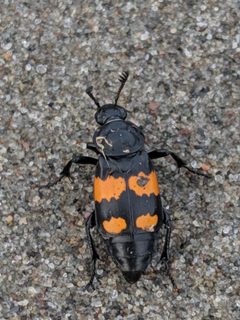
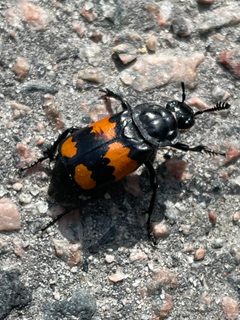
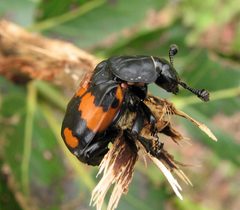
Nicrophorus hebes is a resurrected valid of burying , previously synonymized under N. vespilloides. Molecular, ecological, and morphological evidence demonstrates that North American (excluding Alaska, Yukon, and Northwest Territories) represent a distinct species from the Old World N. vespilloides. The species exhibits reproductive isolation, with most hybrid larvae failing to survive beyond four days. Nicrophorus hebes is rare and tightly associated with wetland , warranting conservation concern.
Pronunciation
How to pronounce Nicrophorus hebes: /nɪˈkrɒfərəs ˈhiːbeɪs/
These audio files are automatically generated. While they are not always 100% accurate, they are a good starting point.
Identification
Diagnostic morphological characters on the epipleuron and metepisternum separate N. hebes from N. vespilloides. reveals distinct BIN (Barcode Index Number) separation from Old World N. vespilloides. Ecological preference for wetlands also distinguishes this .
Images
Habitat
Wetlands
Distribution
Most of North America, excluding Alaska, Yukon, and Northwest Territories. GBIF records document presence in Canadian provinces (Alberta, British Columbia, Labrador, Manitoba, New Brunswick, Newfoundland, Nova Scotia, Northwest Territories, Nunavut, Ontario, Quebec, Saskatchewan) and US states (Connecticut, Illinois, Indiana, Massachusetts, Maine, Michigan, Minnesota, North Dakota, New Hampshire, New York, Pennsylvania, Wisconsin).
Diet
Small vertebrate carcasses
Life Cycle
Biparental care of offspring in subterranean crypts. Larvae from hybrid crosses with N. vespilloides fail to reach four days of age, demonstrating reproductive isolation.
Behavior
Monopolization of small vertebrate carcasses in subterranean crypts. Cooperative biparental care including carcass burial, preparation, and feeding of larvae.
Ecological Role
Carcass decomposition and nutrient cycling through burial and consumption of small vertebrate remains.
Similar Taxa
- Nicrophorus vespilloides (Old World)Previously considered ; distinguished by barcode data, reproductive incompatibility, morphological characters on epipleuron and metepisternum, and preferences
- Nicrophorus vespilloides (Alaska/Yukon/Northwest Territories populations)These North American belong to the true N. vespilloides; N. hebes occurs elsewhere in North America
More Details
Taxonomic History
Nicrophorus hebes was originally described by Kirby in 1837, later synonymized under N. vespilloides, and resurrected as a valid based on integrative evidence including molecular, ecological, reproductive, and morphological data. This study increased the New World Nicrophorus fauna to 22 species.
Conservation Status
The rarity of N. hebes and its tight association with wetlands justify further investigation into its conservation status.
Sources and further reading
- BugGuide
- GBIF taxonomy match
- iNaturalist taxon
- NCBI Taxonomy
- Congratulations, UC Davis Linnaean Games Team: National Champs! | Bug Squad
- Bohart Museum Spotlight on Yellow-Bellied Burying Beetles | Bug Squad
- They eat dead things - Part I - Burying beetles Silphidae — Bug of the Week
- Oklahoma is More than OK for Burying Beetles
- Burying Beetles Are Part of Nature's Clean-up Crew
- Bug Eric: A Potential New Host Record for Calliephialtes grapholithae (Hymenoptera: Ichneumonidae) from a Paper Wasp nest (Hymenoptera: Vespidae: Polistes metricus)
- Cryptic diversity in the New World burying beetle fauna: Nicrophorus hebes Kirby- new status as a resurrected name (Coleoptera: Silphidae: Nicrophorinae)