
Sciodrepoides watsoni
(Spence, 1813)
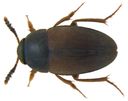
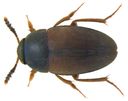
Sciodrepoides watsoni is a small (~3 mm) brown necrophagous in the Leiodidae with Holarctic distribution. It is notable for its utility in , where thermal summation models for its development have been established to estimate post-mortem intervals. The completes development through , three larval instars, and pupa to , with capsule width serving as the most reliable character for instar determination. It has been successfully reared in laboratory conditions at temperatures between 15°C and 25°C.
Pronunciation
How to pronounce Sciodrepoides watsoni: //ˌsaɪoʊdrɛˈpɔɪdiːz ˈwɒtsənaɪ//
These audio files are automatically generated. While they are not always 100% accurate, they are a good starting point.
Identification
Distinguished from other European Sciodrepoides by the shape of its antennal segments. Larvae can be identified to instar using capsule width measurements, which expand by more than 0.1 mm at each .
Images
Habitat
Found in environments where decaying vertebrate corpses occur. In field studies, collected using baited pitfall traps with ripened cheese and fish meat in soil substrate.
Distribution
Holarctic distribution. Europe: widespread except absent from various European islands, Andorra, Estonia, Liechtenstein, Luxembourg, Moldova, Monaco, North Macedonia, Portugal, San Marino, and Vatican City. Also recorded from Armenia, Georgia, Turkey, Russia (including Far East), Kazakhstan, Mongolia, Japan, Korea, China, Canada (Alberta, British Columbia, Manitoba, New Brunswick, Newfoundland and Labrador, Ontario, Quebec, Saskatchewan), and USA (widespread across multiple states).
Seasonality
Most active in warmer seasons; peak activity in late spring and summer.
Diet
Necrophagous; feeds on decaying corpses of vertebrates. All life stages feed on decaying organic matter.
Life Cycle
Complete with distinct stages: , three larval instars (L1, L2, L3), pupa, and . Developmental duration is temperature-dependent. Lower developmental threshold and sum of effective temperatures have been calculated for each stage. Adults tend to hide eggs in substrate. Larvae remain near the food source throughout development.
Behavior
exhibit -hiding in substrate. Larvae remain in proximity to food sources. Adults can be reared individually in laboratory settings, facilitating easier handling compared to gregarious .
Ecological Role
Necrophagous contributing to decomposition of vertebrate remains. Has established utility in for post-mortem interval estimation and cross-validation with other such as flies and mites.
Human Relevance
Significant applications. Thermal summation models developed for this can be used to estimate post-mortem intervals in legal investigations, though further validation on local is required before routine forensic use.
Similar Taxa
- Other Sciodrepoides speciesDistinguished by antennal segment shape; S. watsoni has characteristic antennal that separates it from in Europe.
More Details
Forensic Methodology Notes
Thermal summation models for S. watsoni were developed from laboratory in the Czech Republic at constant temperatures (15, 18, 21, 25°C). Breeding failed at 12°C and 28°C, with high mortality observed at 25°C. These models require validation on local populations before application in legal investigations.
Laboratory Rearing
Successful laboratory culture maintained with moist soil substrate, ad libitum food (fish meat Scomber scombrus used in experiments), and long-day . breed in groups and can be reared individually, offering practical advantages over fly maggot masses for experimental work.
Sources and further reading
- BugGuide
- Wikipedia
- GBIF taxonomy match
- iNaturalist taxon
- NCBI Taxonomy
- Catalogue of Life
- Comments on the biology of Sciodrepoides watsoni watsoni (Spence, 1813) with descriptions of larvae and pupa (Coleoptera: Leiodidae: Cholevinae)
- Thermal summation model and instar determination of all developmental stages of necrophagous beetle, Sciodrepoides watsoni (Spence) (Coleoptera: Leiodidae: Cholevinae)
- Thermal summation model and instar determination of all developmental stages of necrophagous beetle, Sciodrepoides watsoni (Spence) (Coleoptera: Leiodidae: Cholevinae)