
Glacicavicola bathyscioides
Westcott, 1968
Idaho Ice Cave Beetle, Western Blind Cave Beetle
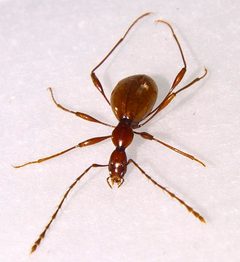
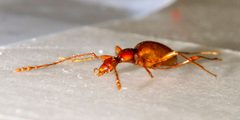
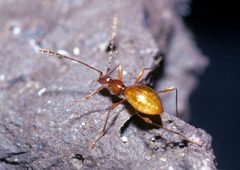
Glacicavicola bathyscioides is a small, eyeless cave to ice caves in the western United States. It exhibits classic troglobitic adaptations including complete blindness, elongated appendages with sensory setae, and a distinctive false physogastric . The has been documented in lava tube ice caves in Idaho and a limestone cave in Wyoming, where it inhabits humid, cold environments with ice formations. Its is poorly understood, with no larval forms observed and an estimated three-year lifespan.
Pronunciation
How to pronounce Glacicavicola bathyscioides: /ˌɡla.sɪˌka.vɪˈkoʊ.la ˌbæ.θɪˈsaɪ.kɔɪdz/
These audio files are automatically generated. While they are not always 100% accurate, they are a good starting point.
Identification
Distinguished from other cave beetles by its combination of: (1) complete absence of and optic neuropiles, not merely reduced eyes; (2) false physogastric with dome-like covering the entire abdomen; (3) -like body form with elongated, setae-covered and legs; (4) association with ice caves in the western United States. The translucent, brownish-orange coloration and small size (6 × 2 mm) further aid identification. Similar cave-dwelling Leiodidae may share some troglobitic traits but differ in body proportions, elytral structure, or geographic range.
Images
Habitat
Restricted to humid, cold caves with ice formations. Documented in lava tube ice caves and limestone caves. Requires temperatures low enough to maintain ice; dies when exposed to higher temperatures. Terrain is irregular and difficult, necessitating specialized locomotory adaptations.
Distribution
to the western United States. Originally described from lava tube ice caves along the eastern Snake River Plain of Idaho. Subsequently discovered in a limestone cave in Wyoming. Distribution limited by thermal requirements.
Diet
Observed feeding on remains and fungus. Bacterial consumption has been speculated but not confirmed.
Life Cycle
No larval form has been observed. Lifecycle suspected to be approximately three years based on limited data.
Ecological Role
Scavenger in cave , processing remains and fungal material in nutrient-poor subterranean environments.
Human Relevance
Subject of scientific interest due to its specialized troglobitic adaptations and restricted distribution. Vulnerable to climate change and disturbance of ice cave .
Similar Taxa
- Other Glacicavicola speciesShare -level traits including troglobitic adaptations, but differ in specific and geographic distribution.
- Other Catopocerinae cave beetlesMay share -level troglobitic features such as reduced and elongated appendages, but differ in body form, presence or absence of false , and elytral structure.
More Details
Troglobitic Specialization
The exhibits one of the most extreme forms of troglobitic among beetles, including complete anatomical loss of visual structures rather than mere reduction.
Taxonomic History
Described by Richard Westcott in 1968, representing a rare example of a to ice cave in North America.