
Gymnochthebius fossatus
(LeConte, 1855)
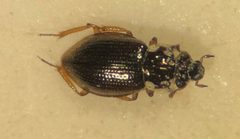
Gymnochthebius fossatus is a of minute moss beetle in the Hydraenidae, first described by LeConte in 1855. It is one of the smallest beetles in North America, with typically measuring less than 2 mm in length. The species has a broad geographic distribution spanning the Caribbean Sea, Central America, North America, and South America. As a member of Hydraenidae, it belongs to a family of beetles commonly known as moss beetles or minute moss beetles, which are primarily associated with moist microhabitats.
Pronunciation
How to pronounce Gymnochthebius fossatus: /dʒɪmˈnɒkθəbiəs fɒˈsɑːtəs/
These audio files are automatically generated. While they are not always 100% accurate, they are a good starting point.
Identification
Identification to level requires examination of microscopic characters including genitalia and subtle body proportions. The Gymnochthebius is distinguished from related genera in Hydraenidae by specific combinations of antennal, pronotal, and elytral features. Specimens should be compared with reference material or authoritative keys to Hydraenidae. The specific epithet 'fossatus' (meaning 'dug out' or 'hollowed') may refer to a particular morphological feature of the species, though this requires verification from original description.
Images
Habitat
Moist microhabitats including mosses, wet leaf litter, and saturated soils near water bodies. Hydraenidae as a are strongly associated with humid environments, though specific microhabitat preferences for G. fossatus have not been documented in detail.
Distribution
Caribbean Sea region, Central America, North America, and South America. The broad distribution suggests either significant capability or cryptic speciation requiring further study.
Similar Taxa
- Other Gymnochthebius speciesCongeneric share minute size and general body form, requiring detailed examination of male genitalia and other subtle characters for reliable identification
- Other Hydraenidae generaMinute moss beetles in related (e.g., Ochthebius, Hydraena) occupy similar microhabitats and may be confused without careful study; antennal structure and pronotal shape are key distinguishing features
More Details
Taxonomic History
Originally described by John Lawrence LeConte in 1855, a prominent 19th-century American entomologist who described thousands of North American . The original description and information would provide important context for understanding this species' diagnostic features.
Conservation Status
Not evaluated by IUCN. The minute size and cryptic habits of this likely result in under-recording; its actual conservation status is unknown due to insufficient survey effort rather than demonstrated rarity.
Research Needs
Basic biological information including larval , feeding habits, and detailed distribution records are lacking. Molecular studies would help clarify whether the broad geographic distribution represents a single widespread or a complex of cryptic species.