
Hydraena
Kugelann, 1794
minute moss beetles, long-palped water beetles
Species Guides
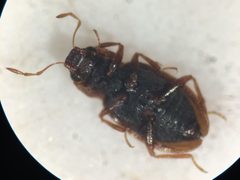
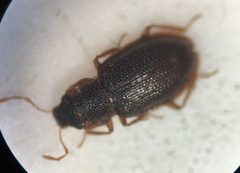
9Hydraena is a highly diverse of minute aquatic beetles in the Hydraenidae, with more than 990 described worldwide. These beetles are among the most overlooked yet species-rich genera of aquatic beetles. They inhabit a variety of freshwater microhabitats including stream margins, ponds, and small creeks, often in association with submerged moss, gravel, or streamside litter. The genus exhibits remarkable geographic distribution across all continents except Antarctica, with major radiations in Australia (85 species), South America (82 species), southern Africa (31 species), and the Palearctic region.
Pronunciation
How to pronounce Hydraena: /hɨˈdriːnə/
These audio files are automatically generated. While they are not always 100% accurate, they are a good starting point.
Identification
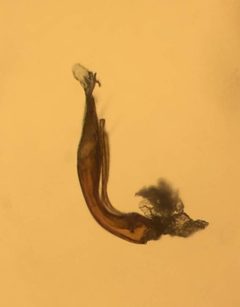
Identification to level requires examination of male genitalia under magnification; the exhibits complex, species-specific structures including various lobes, spines, and sclerotized plates that are diagnostic. Female identification relies on elytral apex shape and spermatheca . The enlarged maxillary palps distinguish Hydraena from other small aquatic beetles such as Ochthebius ( Hydraenidae), which have shorter palps, and from minute staphylinid beetles, which lack the characteristic antennal club and have different body proportions. Within Hydraenidae, Hydraena is distinguished from Hydraenopsis (now often treated as a subgenus) by subtle characters of the mouthparts and male genitalia.
Images
Habitat
Primarily aquatic or semi-aquatic, occupying the hyporheic zone and surface waters of freshwater systems. Australian are typically found in sandy or gravelly stream margins, often associated with streamside litter; some species inhabit ponds, a few are humicolous (living in soil or humus), and at least one species may be subterranean. In Europe, occur in submerged moss growing on rocks in shallow water. Species have been documented in small headwater streams above 1,000 m elevation, as well as in urban environments where semi-natural patches persist.
Distribution
distribution spanning all biogeographic regions except Antarctica. Documented from: Australia and New Zealand; South America (Venezuela, Colombia, Ecuador, Peru, Brazil, Bolivia, Paraguay, Argentina, Guyana, Suriname); southern Africa (Namibia, South Africa, Lesotho, Botswana, Zimbabwe, Angola); Europe (including Greece, Italy, Slovakia, Iberian Peninsula); the Philippines (Luzon, Mindoro, Palawan, Busuanga); and other parts of Asia. One (H. ambiflagellata) occurs in both Australia and New Zealand; H. impercepta is found in Australia and Papua New Guinea.
Behavior
are typically found in shallow water or at the water's edge, often crawling among submerged vegetation, moss, or gravel rather than swimming actively. Some appear capable of recolonizing disturbed where tree cover and water flow have re-established. The beetles' small size and association with habitats make them cryptic and easily overlooked in standard aquatic sampling.
Ecological Role
Likely contribute to nutrient cycling in freshwater systems through processing of fine organic matter in hyporheic and benthic zones. Their presence in submerged moss suggests a role in microhabitat-specific , though specific ecological functions remain poorly documented.
Human Relevance
Serve as indicators of freshwater quality and persistence of semi-natural in urban landscapes. The discovery of new in highly urbanized areas (e.g., Metro Manila) demonstrates their value for documenting biodiversity in unexpected settings and highlights the conservation potential of small habitat patches within cities. No economic importance as pests or beneficial organisms has been documented.
Similar Taxa
- OchthebiusAlso in Hydraenidae, but distinguished by shorter maxillary palps that are not conspicuously enlarged relative to body size.
- HydraenopsisOften treated as a subgenus of Hydraena; separation relies on subtle characters of mouthpart structure and male genitalia that require detailed examination.
- LimnebiusAnother hydraenid with different body proportions and less developed maxillary palps; typically found in similar aquatic microhabitats.
More Details
Taxonomic Diversity
With over 990 described , Hydraena represents one of the most species-rich of aquatic beetles. The true diversity is likely substantially higher, as many regions remain under-surveyed. Major revisionary works have documented 85 species in Australia, 82 in South America, and 31 in southern Africa, with numerous additional species described from Europe and Asia.
Cryptic Diversity
Many are morphologically similar externally, with diagnostic characters restricted to male genitalia. This cryptic diversity has led to extensive synonymy and re-description in the taxonomic literature, and necessitates careful examination of for accurate identification.
Conservation Relevance
The ability of some Hydraena to persist in small, semi-natural patches within heavily urbanized landscapes (as demonstrated in the Philippines) suggests potential for urban biodiversity conservation. However, species associated with primary forests and specific elevation zones remain vulnerable to habitat loss.
Sources and further reading
- BugGuide
- Wikipedia
- iNaturalist taxon
- NCBI Taxonomy
- Catalogue of Life
- Hydraena ateneo Archives - Entomology Today
- Biodiversity where you least expect it: A new beetle species from a busy megacity | Blog
- Australian Hydraena (Coleoptera : Hydraenidae)
- Taxonomy and Iberian Distribution of Hydraena bisulcata Rey and Hydraena barrosi d'Orchymont (Coleoptera: Hydraenidae)
- New records of Hydraena schuleri Ganglbauer, 1901 from Slovakia (Coleoptera, Hydraenidae)
- Two new species of Hydraena Kugelann, 1794 from Brazil (Coleoptera: Hydraenidae)
- Figure 2 from: Freitag H (2013) Hydraena (Hydraenopsis) ateneo, new species (Coleoptera, Hydraenidae) and other aquatic Polyphaga from a small habitat patch in a highly urbanized landscape of Metro Manila, Philippines. ZooKeys 329: 9-21. https://doi.org/10.3897/zookeys.329.5955
- Revision of the species of Hydraena Kugelann (Coleoptera: Hydraenidae) from Palawan and Busuanga, with descriptions of eleven new species, and redescription of Hydraena (Hydraenopsis) scabra d’Orchymont, 1925
- <i>Hydraena lotti</i> sp. nov., a new member of the “<i>Haenydra</i>” lineage from the Peloponnese (Greece), with additional records of <i>Hydraena</i> species in the region (Coleoptera, Hydraenidae)
- Figure 1 from: Freitag H (2013) Hydraena (Hydraenopsis) ateneo, new species (Coleoptera, Hydraenidae) and other aquatic Polyphaga from a small habitat patch in a highly urbanized landscape of Metro Manila, Philippines. ZooKeys 329: 9-21. https://doi.org/10.3897/zookeys.329.5955
- Figure 3 from: Freitag H (2013) Hydraena (Hydraenopsis) ateneo, new species (Coleoptera, Hydraenidae) and other aquatic Polyphaga from a small habitat patch in a highly urbanized landscape of Metro Manila, Philippines. ZooKeys 329: 9-21. https://doi.org/10.3897/zookeys.329.5955
- A revision of the water beetle genus Hydraena Kugelann for southern Africa (Coleoptera: Hydraenidae)
- A revision of the Australian species of the water beetle genus Hydraena Kugelann (Coleoptera: Hydraenidae)
- New records and description of fifty-four new species of aquatic beetles in the genus Hydraena Kugelann from South America (Coleoptera: Hydraenidae)