
Trox striatus
Melsheimer, 1845
Hide beetle
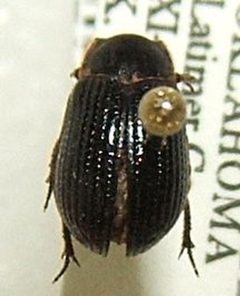
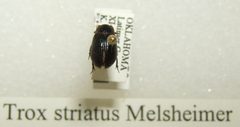
Trox striatus is a hide beetle in the Trogidae, occurring in the Nearctic region of eastern North America. Like other members of its , it specializes in consuming dried animal remains during the final stages of decomposition. The has been recorded from scattered localities across the northeastern and midwestern United States and adjacent Canada.
Pronunciation
How to pronounce Trox striatus: //trɔks striˈaː.tus//
These audio files are automatically generated. While they are not always 100% accurate, they are a good starting point.
Identification
Trox striatus can be distinguished from other eastern Nearctic Trox by examining elytral and surface sculpturing patterns. Specific diagnostic features require detailed examination of the elytral intervals and striae . The species is smaller than many scarab beetles, with typically measuring under 15 millimeters. Accurate identification to species level generally requires reference to taxonomic keys or expert determination.
Images
Habitat
Found in association with decomposing animal matter, particularly dried carcasses, bones, and accumulated fur or feathers. Has been observed on coyote scat containing significant hair content. Occupies terrestrial including prairies, open woodlands, and ranchlands where animal remains accumulate.
Distribution
Nearctic region: recorded from Arkansas, Iowa, Nebraska, New Jersey, Pennsylvania, and Wisconsin in the United States; Ontario in Canada. Distribution appears patchy with few documented observations.
Diet
and larvae feed on dried skin, hair, feathers, connective tissue, and other keratinous remains of dead animals. Will utilize coyote scat as an alternative food source when it contains substantial fur content.
Life Cycle
Larvae develop within or adjacent to food material. occurs in soil. Specific developmental timing and voltinism have not been documented for this .
Behavior
When disturbed, individuals become motionless in a rigid posture, appearing dead. frequently become covered in debris, rendering them cryptic and difficult to detect. They are capable of but are more often encountered on or near food sources.
Ecological Role
Specialized decomposer that processes recalcitrant keratinous materials during late-stage carcass decomposition. Converts animal remains that resist breakdown by most other organisms into nutrients available to soil .
Human Relevance
May occasionally enter buildings when attracted to animal remains, dried skins, or taxidermy specimens. Generally considered harmless and not a significant pest. Potential in for estimating late postmortem intervals.
Similar Taxa
- Trox sonoraeOverlaps in western portions of range; distinguished by geographic distribution and subtle differences in elytral sculpturing
- Other Trox speciesRequire examination of elytral patterns, pronotal shape, and male genitalia for definitive separation; many are morphologically similar
- Dermestes species (Dermestidae)Share on dried carcasses but have clubbed , different body shape, and do not exhibit
More Details
Taxonomic note
Trogidae is sometimes treated as a of Scarabaeidae but is currently recognized as a distinct in most modern classifications.
Collection and observation challenges
The combination of small size, cryptic debris-covered appearance, and immobility when disturbed makes Trox easy to overlook in the field. Specimens may be mistaken for inanimate objects or dead insects.