
Trox robinsoni
Vaurie, 1955
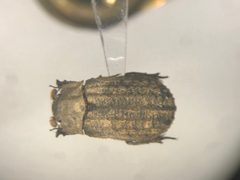
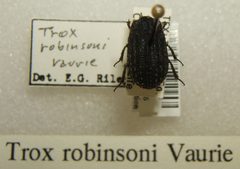
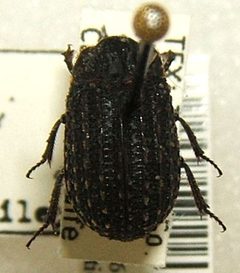
Trox robinsoni is a hide beetle in the Trogidae, described by Vaurie in 1955. Members of this are specialized decomposers that colonize carcasses in advanced stages of decay, feeding on dried skin, hair, feathers, and other keratinous materials when little else remains. The occurs in the north-central United States and central Canada.
Pronunciation
How to pronounce Trox robinsoni: /tɹɒks rɒˈbɪnsəni/
These audio files are automatically generated. While they are not always 100% accurate, they are a good starting point.
Images
Distribution
Recorded from Iowa, Nebraska, North Dakota, Texas, and Wisconsin in the United States, and from Alberta, Manitoba, Quebec, and Saskatchewan in Canada.
Diet
Has been observed feeding on dried animal remains including skin, hair, and feathers; specific dietary records for this are not documented.
Behavior
When disturbed, individuals become motionless in a rigid posture, appearing dead. This aids in avoidance.
Ecological Role
Contributes to terminal decomposition of vertebrate carcasses by consuming keratinous materials that resist breakdown by earlier colonizers.
Similar Taxa
- Trox sonoraeSimilar size range (8-11 mm) and use on dried carcasses; distinguished by geographic distribution and subtle morphological differences in pronotal and elytral .
- Other Trox speciesApproximately 27 occur in North America; identification to species requires examination of male genitalia and detailed study of pronotal and elytral setation patterns.