
Trox plicatus
Robinson, 1940
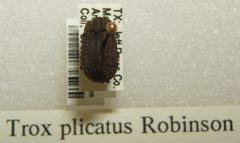
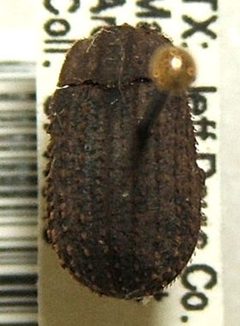
Trox plicatus is a of hide beetle in the Trogidae, described by Robinson in 1940. The species belongs to a specialized in consuming dried animal remains during the final stages of decomposition. Like other trogids, it is adapted to cryptic existence among carrion debris. It has been documented from the southwestern United States and central Mexico.
Pronunciation
How to pronounce Trox plicatus: /trɔks plaɪˈkeɪtəs/
These audio files are automatically generated. While they are not always 100% accurate, they are a good starting point.
Identification
Trox plicatus can be distinguished from other Trox by the specific epithet "plicatus," which refers to a folded or pleated characteristic of the . Within the , species identification typically requires examination of subtle sculptural details on the pronotum and , including patterns of , ridges, and coverage. Trogids are generally recognized by their rough, matte texture and habit of accumulating debris on their bodies, which obscures their outline.
Images
Habitat
Associated with carrion in advanced stages of decay, particularly dried remains including skin, feathers, fur, and connective tissue. Has been found on coyote scat containing fur, suggesting use of alternative substrates that mimic the nutritional composition of mummified carcasses.
Distribution
Southwestern United States (Arizona, Texas) and central Mexico (Aguascalientes, Chihuahua, Distrito Federal, Durango, Guanajuato, Hidalgo, Jalisco, México, Michoacán, Morelos, Puebla, Sonora, Veracruz, Zacatecas).
Diet
and larvae feed on dried animal skin, feathers, fur, and connective tissue from carcasses in terminal stages of decomposition.
Life Cycle
Development occurs on dried animal remains. Larvae feed alongside on keratinous materials and dried tissues.
Behavior
When disturbed, individuals become immobile in a rigid, random posture— known as or death-feigning. This response is sustained and convincing, often leading observers to assume the is dead. The body is typically encrusted with debris from the substrate, providing additional .
Ecological Role
Specialized decomposer that processes recalcitrant animal materials (keratin, dried tissue) that persist after most other carrion insects have departed. Represents a terminal stage in carrion .
Human Relevance
May occasionally enter human dwellings when attracted to animal remains, dried hides, or taxidermy materials. Generally harmless and not associated with stored products in active use.
Similar Taxa
- Trox sonoraeOverlaps in distribution and use on dried carrion; T. sonorae is smaller (8-11 mm) and may differ in pronotal
- Dermestes spp.Shares on dried carcasses and bones, but dermestids have more elongate body form, clubbed , and often display patterned coverage rather than debris-encrusted matte surface
More Details
Taxonomic note
The specific epithet "plicatus" (Latin: folded, pleated) likely refers to a characteristic of the cuticular , though the original description has not been examined.