
Parastasia brevipes
(LeConte, 1856)
Long-clubbed Scarab
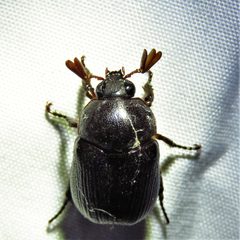
Parastasia brevipes is a of shining leaf chafer in the Scarabaeidae. The species is classified within the Rutelinae, a group commonly known as leaf . It is native to eastern and central North America, with records from multiple states in the United States. The species is relatively well-documented with 173 observations on iNaturalist.
Pronunciation
How to pronounce Parastasia brevipes: /ˌpærəˈsteɪʒə ˈbrɛvɪˌpiːz/
These audio files are automatically generated. While they are not always 100% accurate, they are a good starting point.
Identification
The Parastasia is characterized by elongated, clubbed in males, which distinguishes it from related genera. The specific epithet 'brevipes' (short-footed) may refer to relatively short or legs compared to , though this requires verification. As a shining leaf chafer, likely exhibit metallic coloration typical of the Rutelinae. Accurate identification to level requires examination of male genitalia and comparison with .
Images
Distribution
Eastern and central United States. Documented from Florida, Illinois, Indiana, Iowa, Maryland, Missouri, New York, Pennsylvania, South Carolina, Tennessee, and Virginia.
Similar Taxa
- Parastasia nigraAnother in the same , likely similar in general appearance but distinguished by coloration and male genitalia.
- Other Rutelinae genera (e.g., Anomala, Popillia)Similar body form and metallic coloration, but Parastasia is distinguished by the elongated, clubbed male .
More Details
Taxonomic Note
The Parastasia was historically classified within the tribe Rutelini, but molecular evidence suggests a closer relationship to the Dynastinae , specifically near the genus Parastasia. This classification remains under revision.
Nomenclature
The was described by John Lawrence LeConte in 1856, one of the most prolific American entomologists of the 19th century.