
Paracotalpa ursina
(Horn, 1867)
little-bear scarab beetle, little bear
Species Guides
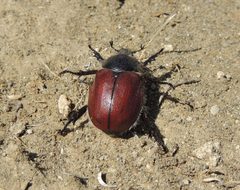
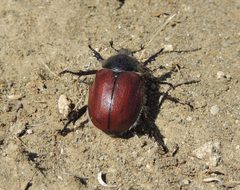
3Paracotalpa ursina, commonly known as the little-bear or little bear, is a of shining leaf chafer in the Scarabaeidae. range from 10 to 23 mm in length and display distinctive coloration with black, metallic blue, or metallic green and , and red-brown or black . The species is distributed in the western United States and Mexico.
Pronunciation
How to pronounce Paracotalpa ursina: /ˌpærəˈkoʊtəlpə ˈɜrsɪnə/
These audio files are automatically generated. While they are not always 100% accurate, they are a good starting point.
Identification
Distinguished from similar scarab beetles by the combination of hairy body, metallic blue/green/black and , and red-brown or black . The size range of 10–23 mm and the specific color pattern separate it from other Paracotalpa and related ruteline scarabs.
Images
Appearance
measure 10–23 mm in length. The and are black, metallic blue, or metallic green. The (hardened forewings) are red-brown or black. The entire body is covered in hairs.
Distribution
Western United States and Mexico.
Human Relevance
Featured in the Nature's Gallery ceramic mosaic mural at the UC Davis Arboretum, where it has been adopted by donors as part of a public art and conservation education program.
Similar Taxa
- Paracotalpa puncticollisAnother shining leaf chafer in the same ; P. ursina differs in coloration pattern and geographic distribution.
- Other Rutelinae scarabsMany ruteline scarabs share metallic coloration; P. ursina is distinguished by its specific combination of hairy body, color pattern, and size.
More Details
Subspecies
Four are recognized: P. u. piceola Saylor, 1940; P. u. rotunda; P. u. rubripennis; and P. u. ursina.